KEY TAKEAWAYS: CanMNT shows improved possession play, but attack sputters in 1-1 draw vs. Ireland


It wasn’t the send-off that the CanMNT had hoped to give their supporters ahead of the 2026 World Cup, as they drew the Republic of Ireland 1-1 at Stade Saputo on Friday.
After a strong start to the game, Canada had looked on track to deliver an emphatic victory for the raucous crowd in Montréal to celebrate, but instead, they squandered their first-half 1-0 lead after running out of steam in the second half.
Of course, for a Canadian team getting set to kick off a major tournament in just under a week, they won’t be too fussed by the result, even if it stings not to win in the end. Ultimately, this friendly was about putting in a good performance, building fitness and avoiding injuries, and Canada appeared to tick all of those boxes. A win would’ve just been the cherry on top.
At the same time, given that some key issues again cropped up for them in this game, that’s a worry, as it just further highlighted some of the questions they face heading into the start of the World Cup.
They remain extremely tough to beat, as they’ve lost just one of their last 16 matches in regulation time, but they’ve also struggled to break open close games, as this was the eighth time across that 16-game stretch that they’ve drawn after 90 minutes of play (and the fifth time in their last seven games heading into the World Cup).
While that’s not a bad thing - teams that are hard to beat will always have the potential to do well in tournament settings - their World Cup dreams could also quickly fizzle out if they don’t find that cutting edge when the tournament starts. Such is the fine knife’s edge they currently live on.
Because of that, look for this Canadian team to carry a bit of hunger from this game over into their World Cup opener against Bosnia & Herzegovina at Toronto Stadium on June 12th, a game where they know they’ll have to be decisive and dangerous to find their first-ever World Cup victory.
Before looking too far ahead, however, here are four KEY takeaways from this one.
The same worries return for the attack ahead of the World Cup:
It was a familiar sight for Canadian fans - for all of the positive possession play that Canada had in this game, quality opportunities were hard to come by for them in attack.
After a second-half breakthrough against Uzbekistan earlier in the week, when they used a surprise formation tweak to score two open-play goals, Canada returned to the status quo in attack against Ireland.
Despite positive performances off the bench against Uzbekistan from the likes of Tani Oluwaseyi and Jonathan Osorio, among others, Canada made just one tweak to the team that started days earlier, with the lone change being a forced one as centre back Luc De Fougerolles entered for Moïse Bombito, who is battling to return to full fitness after a leg fracture.
Because of that, it perhaps shouldn’t have been that surprising to see that some of the issues that Canada faced in the first half of that Uzbekistan game returned to the fold in this match, indicating that they might be more systematic than anything else.
That’s important to note because it’s not as if Canada actually were that bad on the ball vs. Ireland. In fact, it was the opposite - they were excellent in possession in this game, as they held 67% of the ball and completed 86% of their passes, doing a good job of pinging the ball around the pitch at a good tempo.
For a team that does their best work without the ball, it was a sign of how much they’re improving on that side of the game that they looked as comfortable as they did against a good defensive team, which is great news. Both due to their style of play and that of their World Cup group stage opponents, they’ll likely be pushed to keep more of the ball in their upcoming games, so it’s encouraging to see that they’re looking more confident in doing that.
At the same time, for all of the good work Canada did on the ball, they weren’t dangerous enough in the areas where they could actually hurt Ireland in possession. 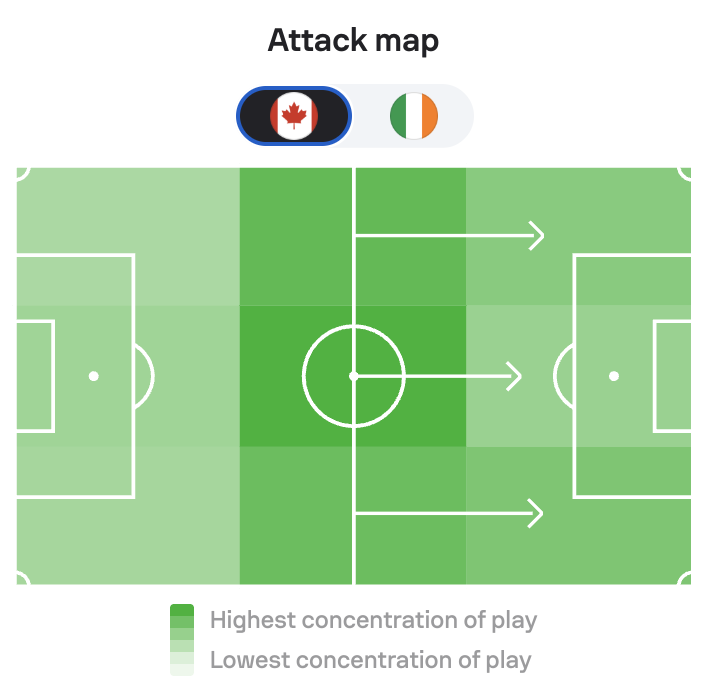
Here's the CanMNT's possession map from this game, showing that while they had a lot of good moments on the ball in the middle of the pitch, they weren't dangerous enough in the final third (SofaScore)
Certainly, the numbers paint a picture of those struggles - despite their good passing statistics, they had just 25 touches in Ireland’s box. For context, they had 17 touches in the box in the second half against Uzbekistan after their slow start (they had just nine touches in the box in the first half of that game), and that’s despite that game being one where they held 52% of possession and completed 82% of their passes.
Yet when seeing the low number of touches they had in Ireland’s box, you can understand why, despite generating an impressive 20 shots, Canada only mustered up 1.10 xG and failed to muster up a single big chance in this game (and why they also only had two shots on target, making it fitting that their lone tally was an own goal).
GOAL 🇨🇦
— OneSoccer (@onesoccer) June 6, 2026
Stephen Eustaquio's corner deflects off Jake O'Brien and the CanMNT 🇨🇦 take a 1-0 lead over Republic of Ireland 🇮🇪
🔴 Watch LIVE on OneSoccer & TSN pic.twitter.com/4YbuHBYYta
That’s less than ideal, because with the possession they had and the areas they attacked with the ball, you would’ve expected them to put Ireland under more pressure than they did, as it ended up being a relatively comfortable defensive performance for the visitors. 
Here's the CanMNT's shot map from this game, showing that they didn't actually generate a lot of attempts in the dangerous areas inside the box (SofaScore)
Safe to say, that’ll give head coach Jesse Marsch something to ponder heading into his World Cup opener. Once again, it’ll stand out that Jonathan David and Cyle Larin both failed to score, as David has just two goals in his last nine games for Canada (and those were a pair of penalties against Iceland in March), while Larin now has just one goal in his last 24 appearances for his country.
Who's starting up top for the CanMNT 🇨🇦 next week: Tani Oluwaseyi, Cyle Larin or Promise David? 🎯
— OneSoccer (@onesoccer) June 6, 2026
Here's what Jesse Marsch had to say about the striker position 🎙️ pic.twitter.com/7KjShdj6Wz
The pair were actually decently lively in this game when you look at the advanced figures, as they combined for 0.5 xG (0.29 for David, 0.21 for Larin) on six shot attempts (three apiece), but they had just nine touches in the box (five for David, four for Larin), showing that they weren’t as dangerous around the box as hoped.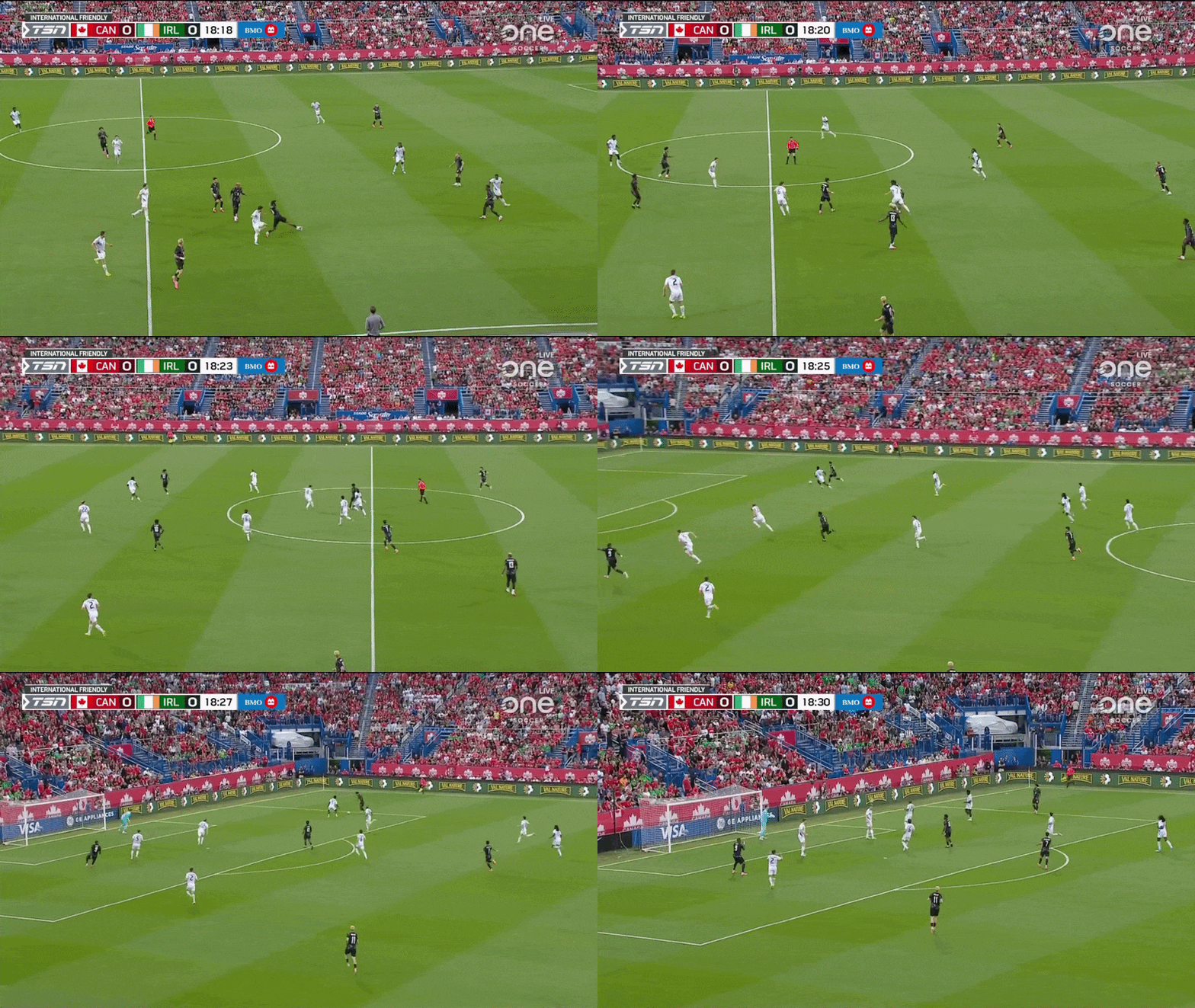
Here's a moment that shows where the CanMNT struggle in attack. It's actually a pretty great sequence, as Ismaël Koné found Tajon Buchanan with an excellent pass, but he was too slow to recognize the run of Cyle Larin in the box (OneSoccer/TSN)
As they often do when paired together, they sometimes ended up occupying similar spaces in the final third, which made it hard for them to find openings in the box, which was frustrating to see, as that’s where they’re at their best as strikers. 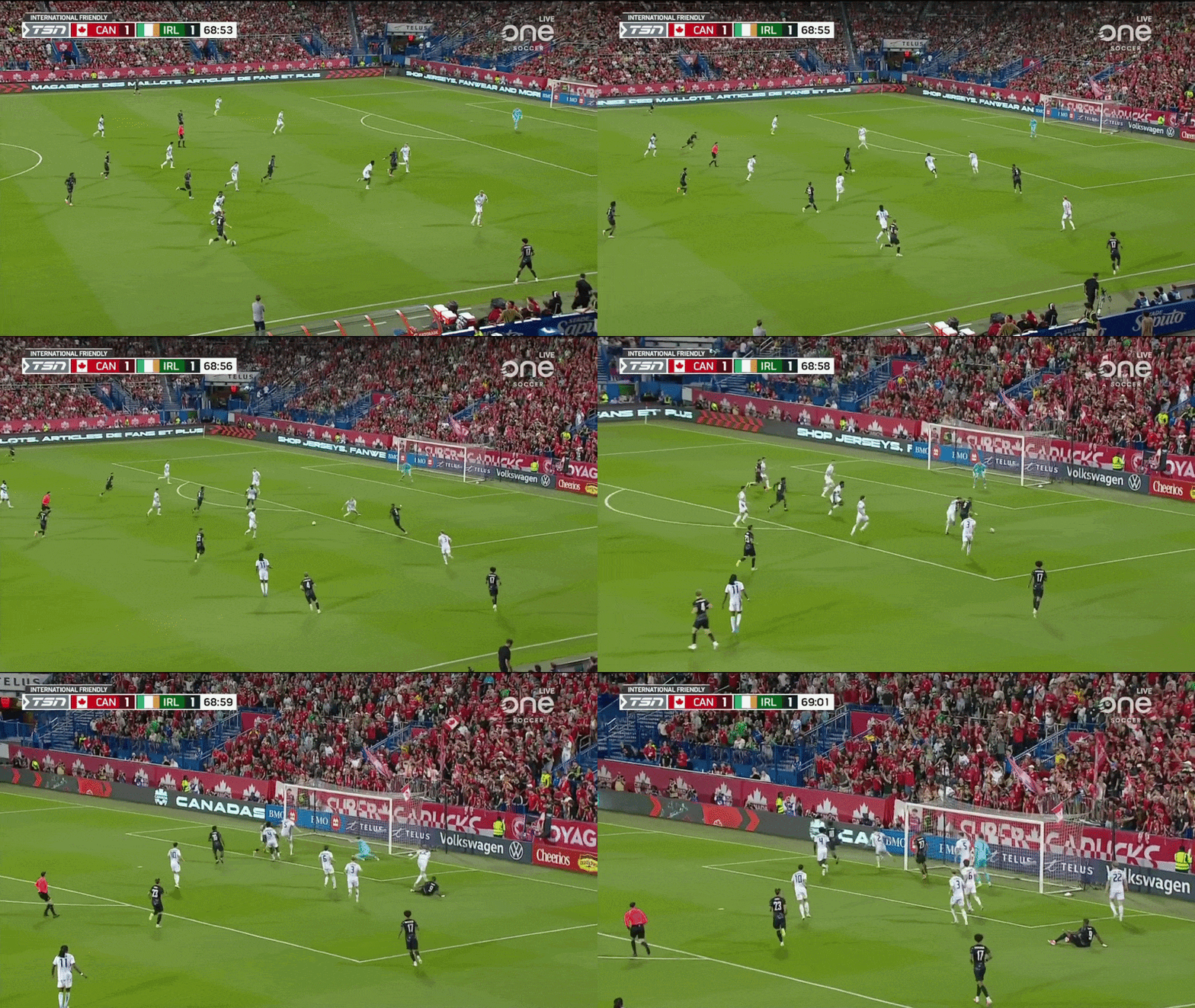
Here's a play that showed what David and Larin can do when they find the right spaces, but Larin was unlucky not to score after a nice set-up from David (OneSoccer/TSN)
At the same time, while the pair struggled to impose themselves on the game, they weren’t the only Canadians who will feel that they weren’t able to leave as much of a mark as hoped in attack.
For example, Liam Millar had another bright performance on the wing, but he just lacked the finishing touch in his game. That he had five shots worth a total of 0.228 xG, but that none reached the target, sums up how things went for him offensively, as he was unable to turn his good work into end product. 
Here's a moment Millar will want back. His decision to shoot wasn't a bad one, but not hitting the target when Larin, David and Buchanan are all in excellent positions hurts in hindsight (OneSoccer/TSN)
Meanwhile, Tajon Buchanan, someone whom Canada would like to be getting the ball in shooting areas, had just one shot, coming early in the match. He’s now not scored in 10 games after an excellent run of goalscoring form for Canada in the summer of 2025, which is a worry, given that he’s a key source of offence for this Canadian team. 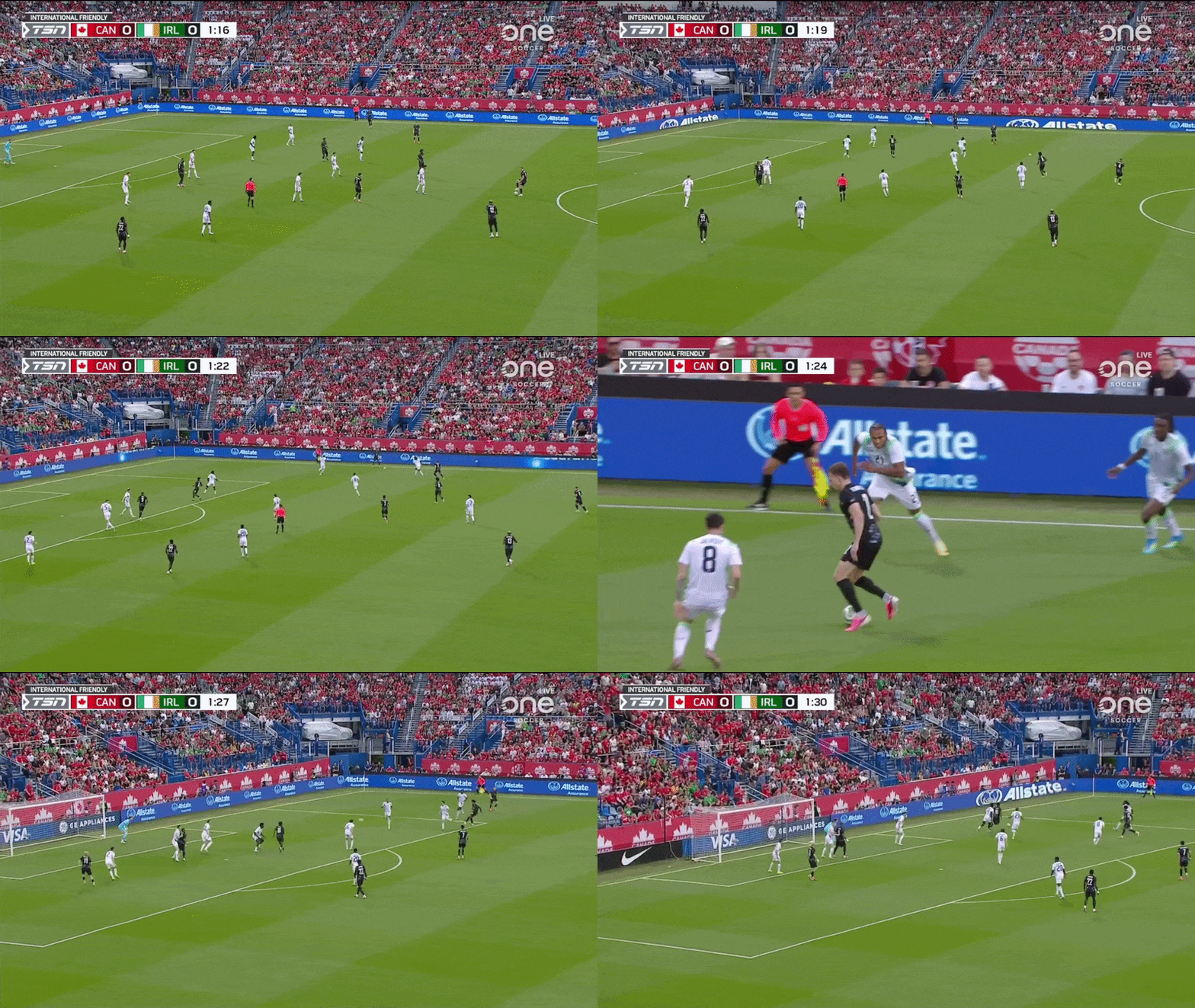
Here's Buchanan's only shot of the game... which happened less than two minutes into the game. It's unfortunate he was not able to have more moments like this, as this is where he's at his best (OneSoccer/TSN)
If anything, however, that gives an idea of how things are going for Canada offensively right now, as a lot of the key attackers that they’re leaning on heading into the World Cup are slumping at the moment. You add in that the likes of Ali Ahmed and Promise David aren’t fully fit, and that Marcelo Flores got injured right before the tournament, and that’s not helped matters, either.
At the same time, while there are a lot of worries about the struggles of these attackers, it feels fair to suggest that Canada’s attacking system isn’t helping them - especially when considering how free-flowing Canada looked in the second half against Uzbekistan, which was one of the rare moments they’ve thrown out their system and tried something new over their most recent stretch of games. 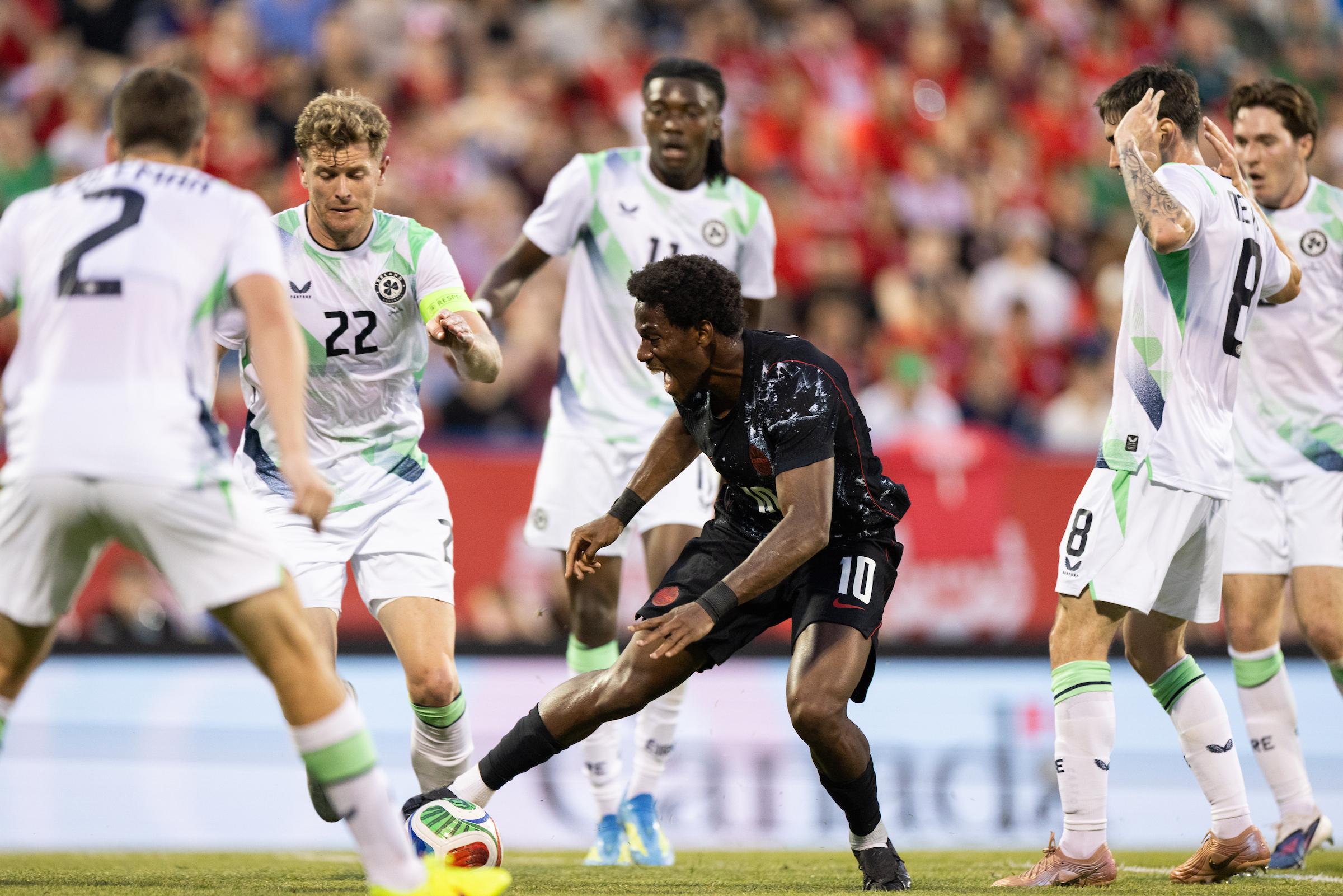
Photo by Thiago Szwarc
Crépeau shines after big week:
Maxime Crépeau didn’t need to affirm in this game why Jesse Marsch selected him as Canada’s #1 goalkeeper heading into the World Cup, as he was chosen for his overall body of work over the last few years more than anything, but it didn’t hurt for him to showcase himself the way he did against Ireland.
It wasn’t a busy night at the office for Crépeau, who got to represent Canada for the second time in less than a year at his old stomping grounds at Stade Saputo, but he came up big when called upon.
First, he almost had a moment to remember on Ireland’s goal, which came from Chiedozie Ogbene. Right before Ogbene tapped the ball into an empty net, Crépeau stepped up and made an outstanding penalty save on Troy Parrott, flying to his left to deny what was a solid attempt from Parrott.
GOAL 🇮🇪
— OneSoccer (@onesoccer) June 6, 2026
A BIG Max Crepeau save from the penalty spot but Republic of Ireland follow up to equalize vs. CanMNT 🇨🇦
🔴 Watch LIVE on OneSoccer & TSN pic.twitter.com/DyO4U76sdV
Unfortunately for Canada, they were slow to react to that excellent save, allowing Ireland to score on the follow-up, denying Crépeau what would’ve been a storybook scenario.
Yet, his night wouldn’t be done there, as he then came up with a game-saving moment in the 83rd minute.
After a sloppy turnover from Canada, Ireland stormed up the field on a counter-attack, one that finished exactly the way they would’ve wanted - with young striker Mason Melia all alone in front of goal.
But, despite having the time to take a touch and pick his corner, Melia would be denied by Crépeau, who did an excellent job of reading where the striker wanted to put his shot and then made himself big to make the stop.
LET'S GO MAX CREPEAU 🤯
— OneSoccer (@onesoccer) June 6, 2026
A point-blank save DENIES Ireland as the CanMNT 🇨🇦 no. 1 earns his keep 😎
🔴 Watch LIVE on OneSoccer & TSN pic.twitter.com/zOoV7sY1yO
With that, he showed why Canada is ready to lean on him this summer. Not only is he a leader who wears his heart on his sleeve (as shown by his emotional reaction to the Canadian anthem before the game), but he seems to relish big moments.
What it means! 🥲🥺 #CanMNT pic.twitter.com/LllctH6Ia4 pic.twitter.com/8shGoqm896
— Alexandre Gangué-Ruzic (@AlexGangueRuzic) June 5, 2026
He made a habit of coming up big for Canada in those moments during their run to the 2024 Copa América semi-finals, and he managed to show that same flair for the dramatic with his stop on Melia in this game.
Canada will hope he doesn’t have to make any saves of this magnitude during the tournament, of course, but with the aggressive style of defending that they employ, these sorts of sequences can happen and they know it - so it’ll help their confidence to know that Crépeau will be ready and alert to any mistakes that happen in front of him. 
Photo by Thiago Szwarc
De Fougerolles looks ready for the big stage:
Heading into the start of the World Cup, there’s naturally a lot of concern about the status of centre-back Moïse Bombito, who, after going 30 minutes against Uzbekistan in his first appearance since October, didn’t feature at all in this game as he dealt with sensitivity in his leg.
As it stands, it’s hard to imagine Bombito starting Canada’s World Cup opener unless a lot changes over the next week, and even if he does manage to make himself ready, there will be concerns about his match sharpness given his lack of minutes.
Given his importance to this team, as he’s a huge part of what makes Marsch’s system tick, that’s a big blow. Ultimately, this team is at its best when Bombito is in it.
But with Bombito’s status up in the air, Canada has had to adjust to what life could look like without him, and the good news is that things don’t appear to be so bad.
A big reason for that?
The play of Luc De Fougerolles, who was excellent after coming on for Bombito against Uzbekistan, and he built off with an even better performance in a starting role against Ireland.
Despite having to deal with the always-dangerous Troy Parrott, De Fougerolles was more than up to that task, showing why Canada was willing to turn to him, and not more experienced players like Joel Waterman, to step up in Bombito’s absence.
Not only was De Fougerolles extremely sharp defensively, but he played with the exact sort of aggression that Marsch wants to see out of defenders, not looking afraid of engaging in physical challenges and hard duels.
Here's a clip showing De Fougerolles's aggression when defending (OneSoccer/TSN)
That’s key, because that can often be hard for younger defenders to do, but that didn’t bother the 20-year-old, as the defensive metrics from this game show (he finished with five clearances, three recoveries and won four of six duels). 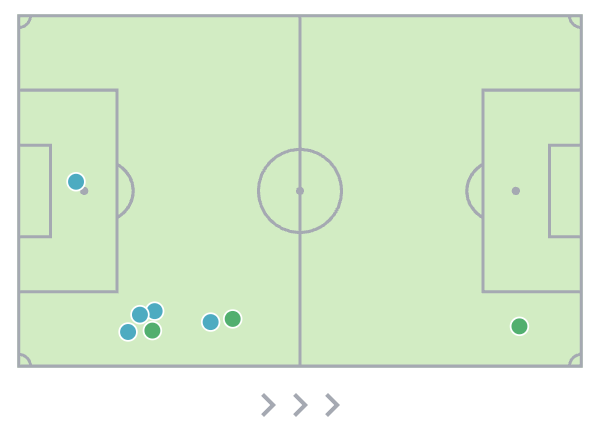
Here's all of De Fougerolles's defensive actions from this game, with clearances in blue and recoveries in green (SofaScore)
You add in the work that he did on the ball (he completed 54 out of 60 passes, including three out of six long balls and 14 passes into the final third), and it marked a complete performance from the youngster, who has started to stack up a good chunk of those for Canada. 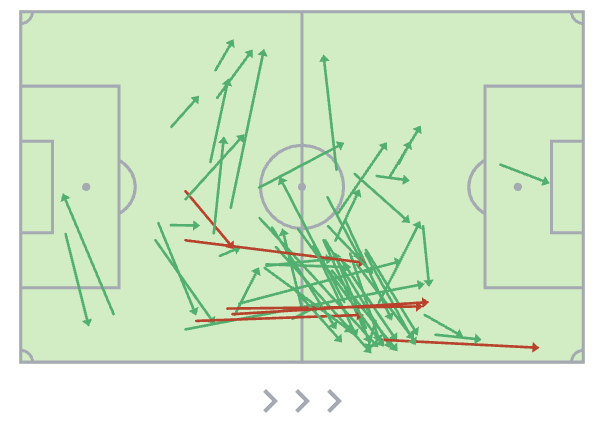
And here's his pass map (SofaScore)
Because of that, you have to wonder how this changes Marsch’s thinking when it comes to World Cup games. 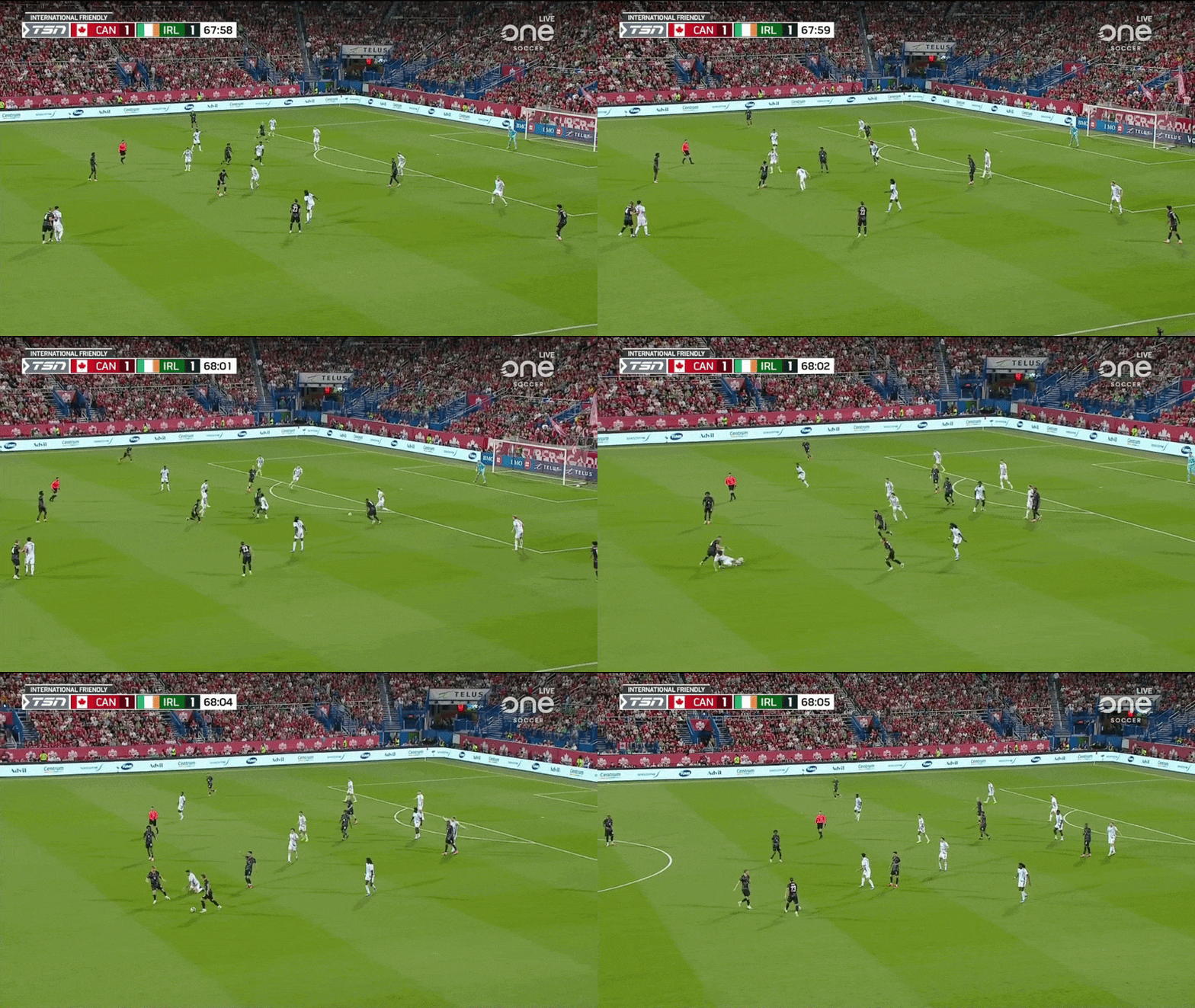
Here's De Fougerolles showing that he can do what Marsch asks of his centre-backs, which is to step high up the pitch and disrupt play (OneSoccer/TSN)
With how De Fougerolles has played in this camp and in the other opportunities he’s earned over the last 12 months, you have to think it gives Marsch a reason not to push Bombito and Alfie Jones, who is also coming back from injury (and is another key centre-back option Marsch would love to lean on if fully healthy). 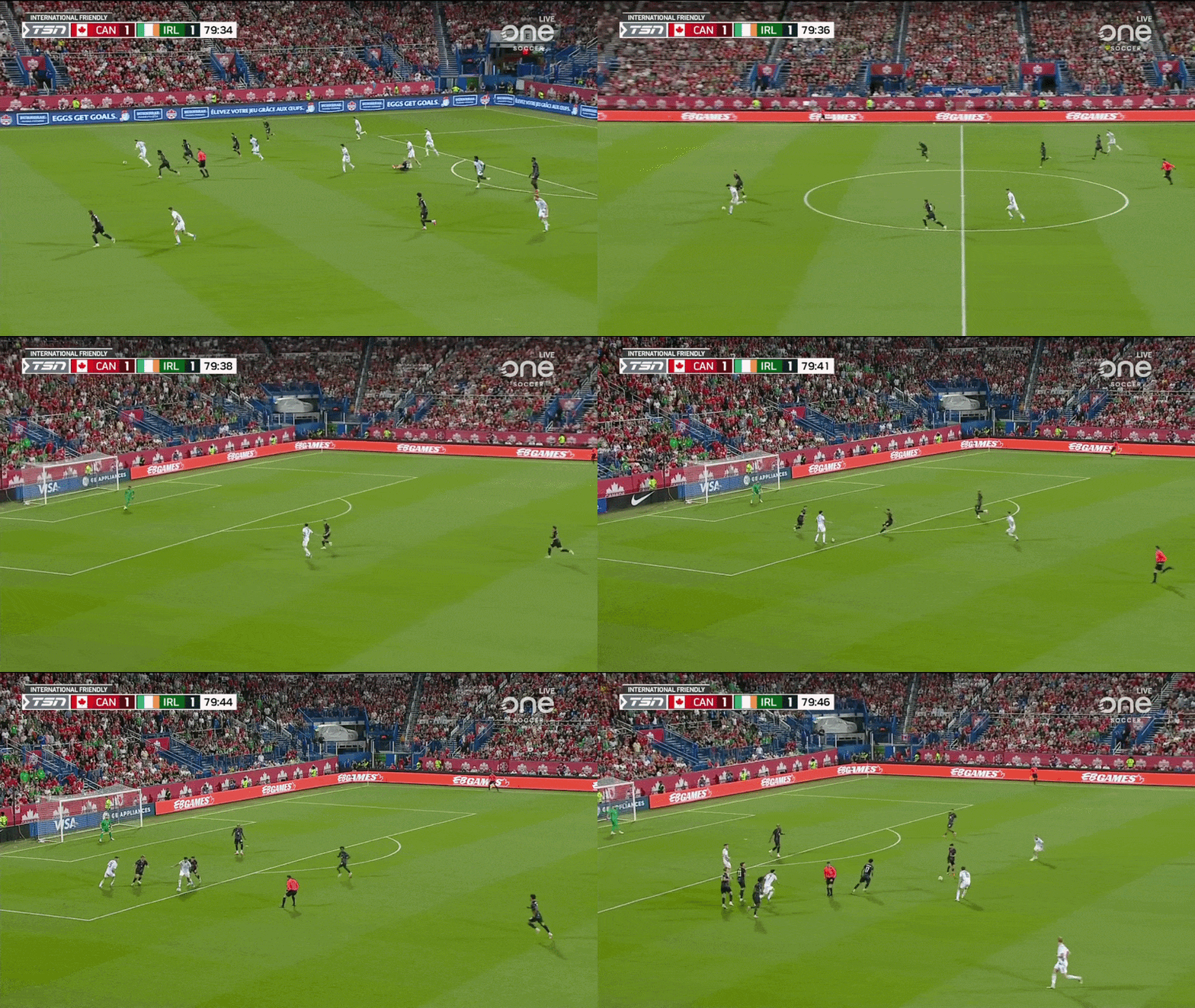
And here's De Fougerolles showing good patience to shut down a counter-attack, as he avoided lunging in and making a poor play that would've let Ireland have a dangerous look at goal (OneSoccer/TSN)
For example, could it not make sense for Marsch to lean on De Fougerolles and Derek Cornelius to start their World Cup opener against Bosnia & Herzegovina, giving Bombito and Jones some extra time to get ready before the next game against Qatar a week later?
If you can get another performance like this out of De Fougerolles in that World Cup opener, you have to think that might be the way for Canada to go as they continue to deal with this crisis of centre-back injuries. 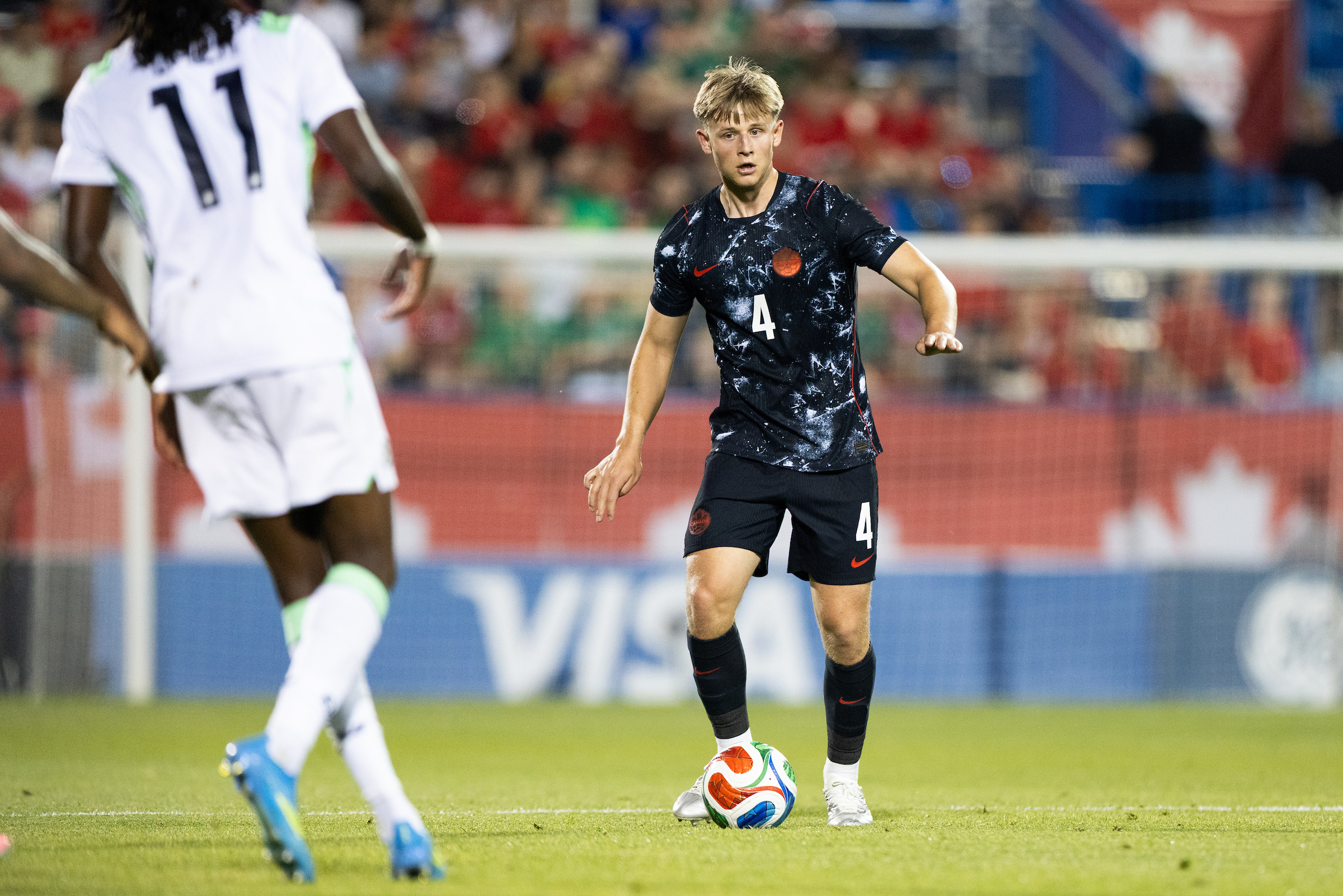
Photo by Thiago Szwarc
A quick note on the set-pieces:
Lastly, it’s worth shouting out the fact that Canada scored on a set-piece in this game, as that’s been something that they’ve struggled with in recent years.
It wasn’t exactly as they drew it up, as they relied on two extremely fortuitous bounces off Irish players to get the goal, but they won’t care about that in the end. What counts is that the service they put into the box on that play was excellent, and they made enough dangerous runs to force a situation like that.
And while their set-piece execution wasn’t at that level all night, they also had a few other noteworthy and dangerous sequences from dead-balls throughout the game, too, so it’s not as if their goal came from a flukey, one-off play, either.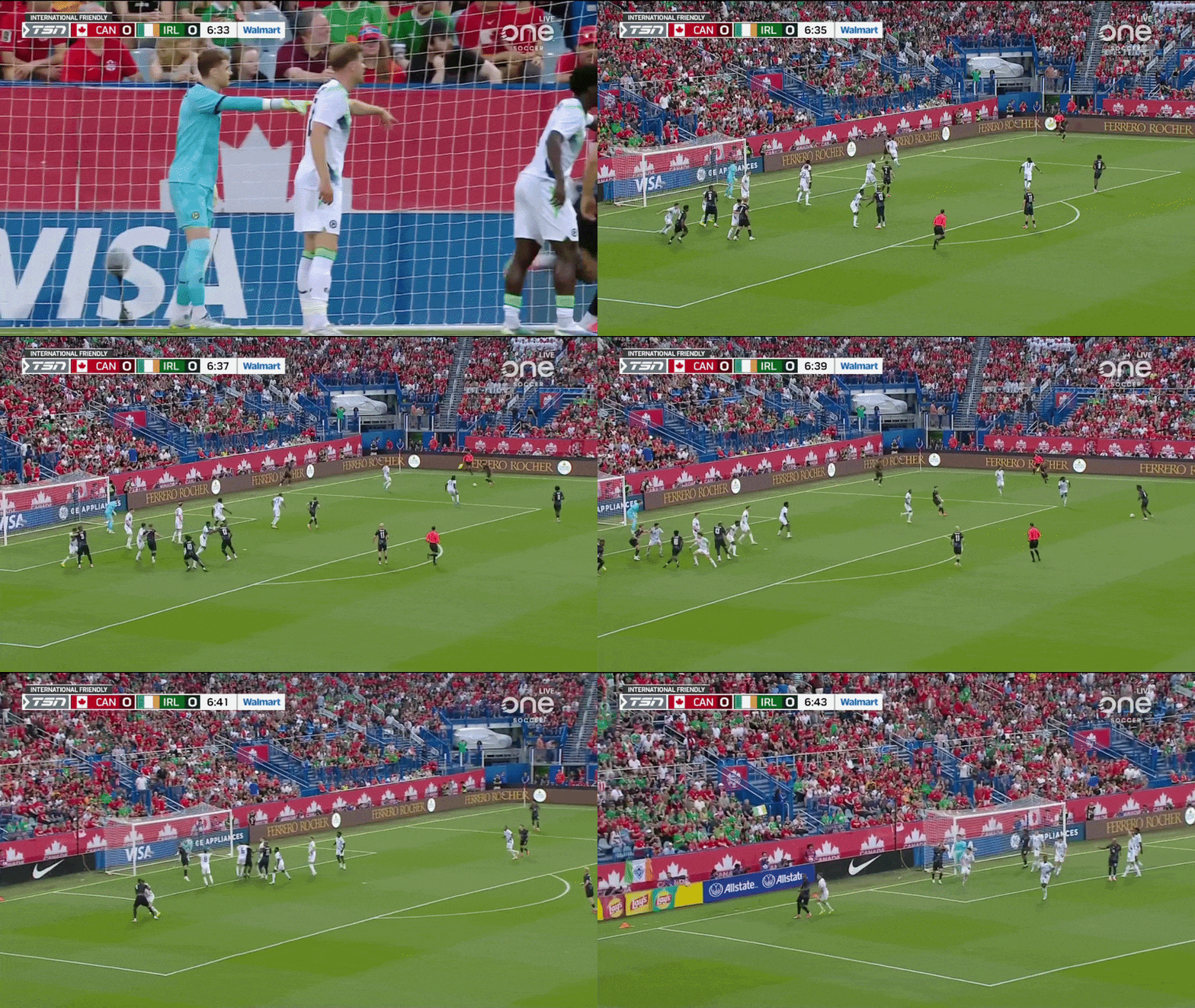
Here's one of Canada's corner routines, as they decide to play short, doing a good job of creating a better angle to actually cross the ball into the box (OneSoccer/TSN)
Because of that, look for them to use this goal as a boost heading into the World Cup, as they look to refine and sharpen this side of their game. 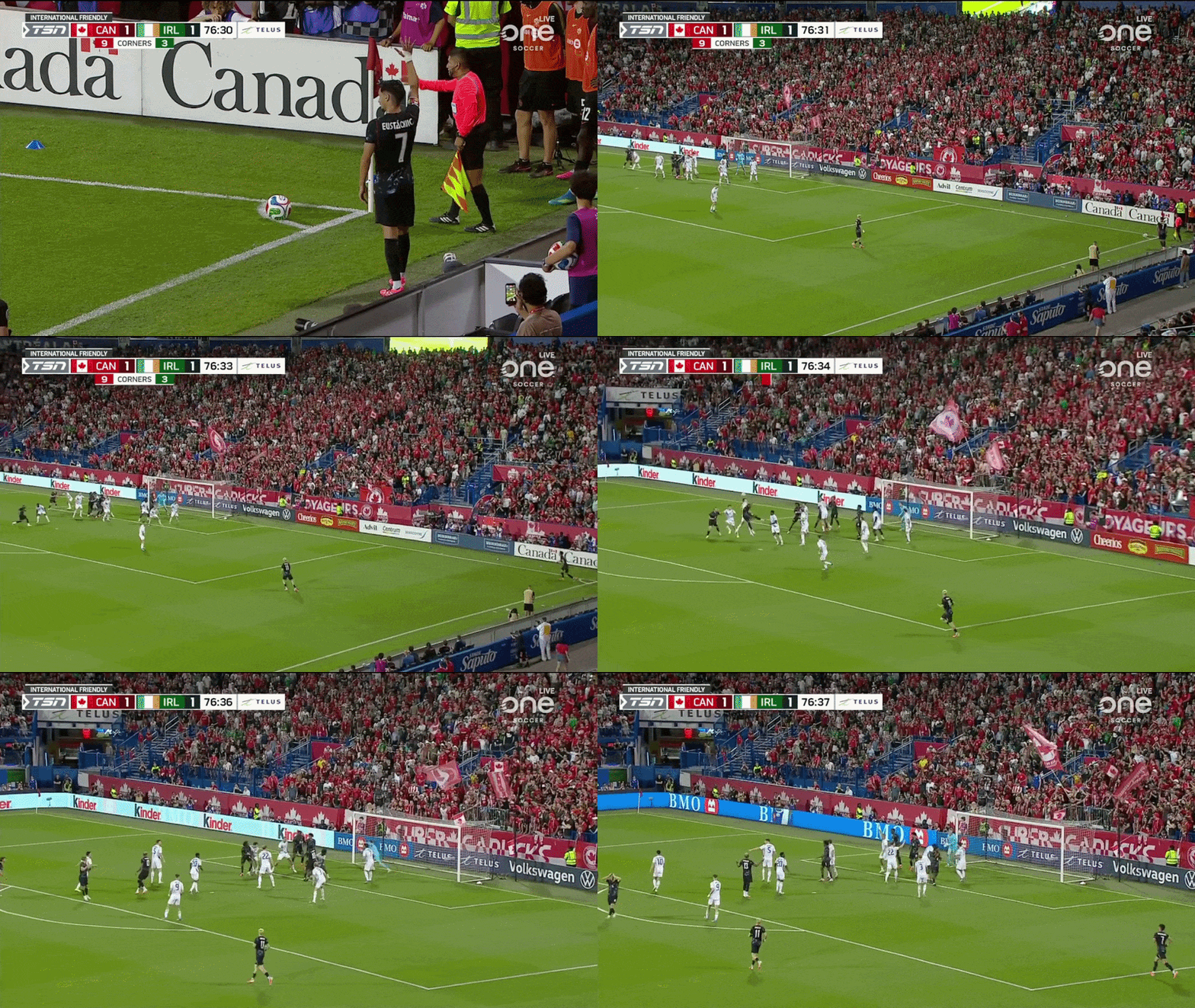
And here's a good use of an outswinger, which aren't as popular any more (inswingers are seen as typically more dangerous), as Canada initiates first contact with the ball, creating a good chance for Jonathan David (OneSoccer/TSN)
With the struggles they’re dealing with in the attack, set-pieces could be their best way towards goals at the World Cup, showing why what they showed in this game was encouraging to see.