KEY TAKEAWAYS: CanMNT unable to ride high-flying start to victory in 3-0 defeat to Morocco


They were so close, yet so far.
On paper, it’s easy to look at the CanMNT’s 3-0 defeat to Morocco in their World Cup Round of 16 matchup and suggest that they were far from qualifying for the quarter-finals. Given Morocco’s quality, a lopsided result like that was expected, especially against a Canadian side playing on a stage like this for the first time.
To say that it was a dominant victory, however, would be to ignore context. While the scoreline suggests that it was an easy Moroccan victory, the reality is that Canada pushed them right until the end, with two of those three goals only coming after the 80th minute.
And, for a decent amount of time, there seemed to be a reality that existed where Canada could’ve indeed upset Morocco, as they put in a first-half performance for the ages.
For 45 minutes, Canada weren’t just going toe-to-toe with Morocco, but they were on top of them, and looked likeliest to break the deadlock and storm away to a victory, one that would’ve stunned soccer fans around the world.
Of course, as many will tell you, a game isn’t won after 45 minutes, and that’s especially true in a situation where all Canada had to show for their dominance was a 0-0 scoreline at half-time. To win at the highest level, it isn’t enough to play well - you also have to be clinical with your chances and limit mistakes defensively.
Unfortunately for Canada, they weren’t able to do the former in the first half, and that cost them, as they started to show more vulnerabilities defensively as the game went on. Against a side like Morocco, they just couldn’t afford to do that, and they paid for it in the end.
Because of that, you can’t help but feel bittersweet about how this one ended from a Canadian perspective. With how they played in that first half, you can’t help but look at this defeat and wonder if Canada missed a glorious opportunity to upset Morocco.
At the same time, it’s important to remember where this Canadian team finds themselves on their journey as a team. This was a side that had never played in a game like this before, so it’s only normal that they were eventually overwhelmed by a savvy Moroccan side who made a deep run at this last World Cup, and had eyes on improving on that this year.
They made their country proud. They fought for every minute.
— OneSoccer (@onesoccer) July 4, 2026
They made history, no matter this result.
Canadian heroes. Forever. ❤️#CanMNT 🇨🇦 pic.twitter.com/2RjsNKP3Ex
It’s often said that to learn how to win, you need to learn how to lose, and in this defeat, Canada can say that they got a taste of what it takes to beat an elite side in a World Cup knockout game.
Such is the reality of the World Cup that they won’t get to apply these lessons for at least four years, but they’ll still be able to use it as fuel as they chase their short-term goals, such as winning a trophy within Concacaf and qualifying for the 2030 World Cup.
One thing’s for sure after this performance, however - the narrative around this Canadian team has changed. They’ve now proven that they have the capacity to be a top team, and can be judged as such going forward.
For now, though, they’ll find that hard to do, as they balance the fact that they accomplished everything they set out to do this World Cup, while also feeling like they didn’t get the ending they deserved - two realities that don’t feel like they coexist at this very moment.
With that in mind, here are four KEY takeaways from this one.
What went right for Canada in hot start… and what changed at halftime?
It was Jesse Marsch’s Canada at their absolute finest.
Not only did they come flying out of the gates in this game, but they did so by playing their way, as they overwhelmed Morocco with their high press, forcing several dangerous turnovers in the first half.
At every opportunity, they didn’t waste a second in throwing themselves into duels, as they came out with the right intensity and energy for a knockout game.
Seemingly, Morocco didn’t have any answers on how to adjust to that, either. At the first-half hydration break, you wondered if they’d make a tactical switch to get any sort of momentum back, but instead their only change seemed to be to at least try and match Canada’s intensity, which proved to be a futile exercise - if there’s one thing this Canadian team loves, it’s when a team tries to engage in a physical contest with them, so they were more than up for that challenge.
After all, this is a team that plays in Concacaf, where physical contests are a way of life, which is why they didn’t seem to mind the nature of how the first half ended, with the chippy play leading to a stream of yellow cards.
To return to Canada’s press, however, what was interesting to see was the adjustments they made to it in this game, especially when comparing what they did in their Round of 32 clash vs. South Africa.
Against South Africa, they sat in a sort of 4-1-2-1-2 mid-block, where their goal was to force long balls and dangerous passes into their #6s, a strategy that worked quite well for them.
This time, though, Canada returned to their usual 4-2-2-2, but instead of pushing up the pitch as they usually do, they decided to sit in more of a mid-block once again.
Yet, as mentioned earlier, they still pressed and forced dangerous turnovers, and that was because of one tweak they made - they decided to trigger their press anytime Morocco’s full backs received the ball, knowing that they liked to take their time in possession.
Whether that was Achraf Hakimi on the right (or Azzedine Ounahi, who also dropped into that right back position when Hakimi pushed forward), or Noussair Mazaraoui on the left, Canada made sure to immediately press the ball as soon as either of those players touched the ball, knowing that they’d usually then take a second, third and fourth touch after that.
With Morocco building up in a back four, with a midfield double-pivot ahead of them, Canada were able to catch Morocco in possession a few times, as their strikers and midfielders did a great job of blocking off the passing lanes to Morocco’s other centre backs and midfielders in reaction to the traps Canada’s wingers would set on those full backs.
That was huge, as a big key for Morocco’s success is their ability to build through their midfielders and their full backs, and Canada completely suffocated them out of the game in the first half. 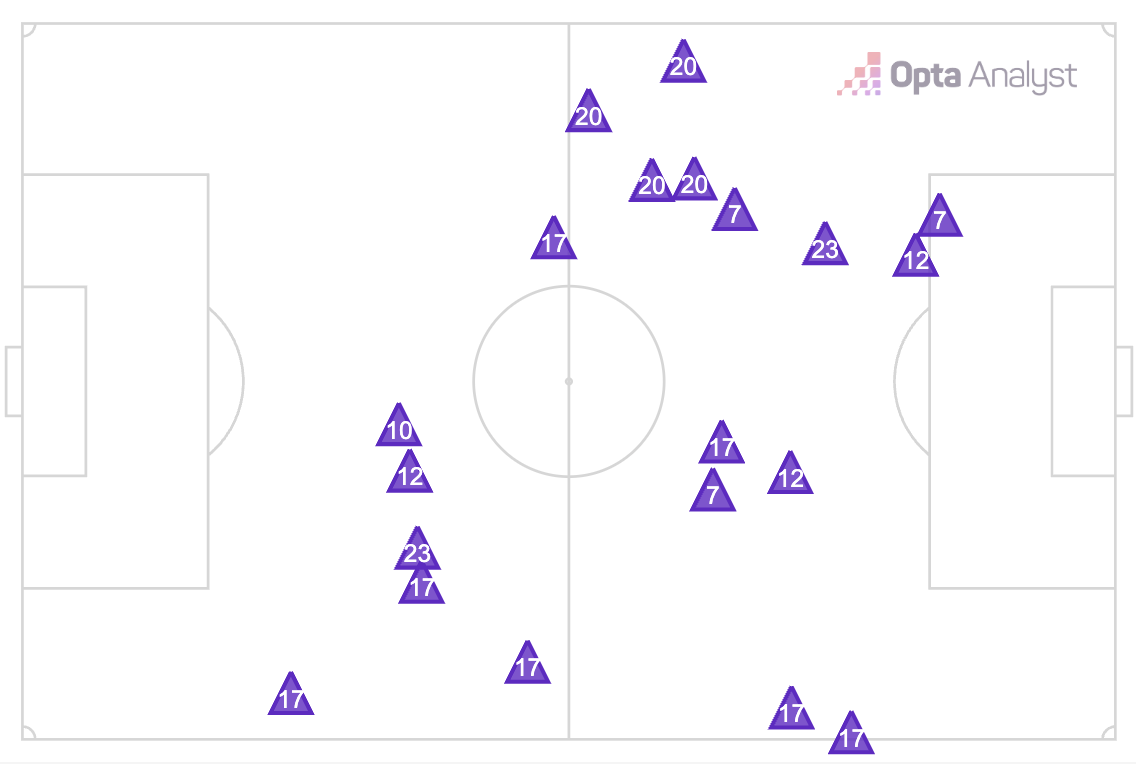
Here's the duels won by Canada's front six in the first half, showing how they were able to win the ball out wide and in central areas thanks to their press (OPTA)
As a result, Morocco were unable to generate much of anything in possession, other than hopeful long balls that Canada easily mopped up. The numbers paint a picture of Canada’s early dominance, too, as they held Morocco to just one shot worth 0.02 xG, and one touch in their box in the first half - and that's without considering the dangerous counter-attacks they generated off the few moments they won the ball back. 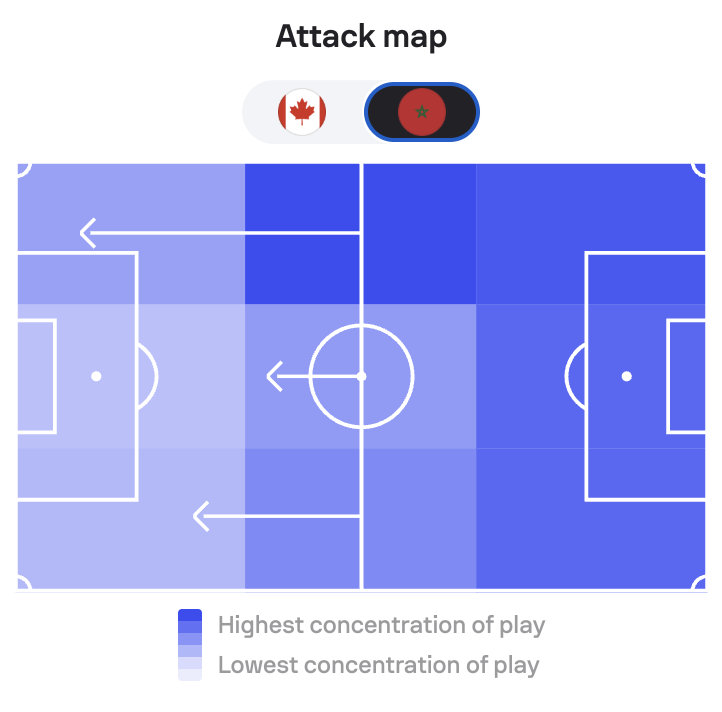
Here's Morocco's pass map from this game, showing that they struggled to get past Canada's initial line of pressure (SofaScore)
Unfortunately, though, Canada were unable to maintain that press in the second half, and what will frustrate them is that Morocco’s breakthrough came on a moment where Canada lost concentration and lost their defensive shape.
While Morocco scored their opening goal in the 50th minute off a clever free kick, one where Ounahi caught Canada asleep in the box, the mistake happened before the foul was even given away. After a corner, Canada was slow to get back into their defensive shape, as Morocco decided to play the goal kick quickly.
Through that, they were able to finally avoid getting pressed out wide, which allowed Hakimi to play a quick line-breaking pass to Brahim Diaz, who found the run of Soufiane Rahimi with a nice through ball, and he baited Luc De Fougerolles into making a clumsy challenge on him for the free-kick.
MOROCCO OPENS THE SCORING!
— TSN (@TSN_Sports) July 4, 2026
Azzedine Ounahi with the brilliant first time finish to make it 1-0. pic.twitter.com/gjAok60sfj
Yet, that shows how Morocco was able to adjust to Canada’s press. Instead of changing their build-up shape, which could’ve made a lot of sense to do, they just asked their full backs to be quicker on the ball, and that allowed them to play through Canada’s press more and more as the game went on.
Especially as the game got stretched late, that ended up playing into Morocco’s hands, which is why they were able to put away the game with two late goals.
Morocco makes it 2-0, Azzedine Ounahi's second goal of the match. 🇲🇦 #FIFAWorldCup pic.twitter.com/HnDDZ30AOl
— TSN (@TSN_Sports) July 4, 2026
Canada actually did a pretty good job of limiting big breakdowns in their pressing structure, which is why Morocco generated just five shots, but they were clinical with those attempts, scoring three goals on just 0.78 xG, as the chances they got were all dangerous ones.
That’s the risk that comes with employing an aggressive pressing system, however, and it’s that when the press gets broken, it can be easy to leak dangerous opportunities, especially if you go down a goal and are forced to take more risks to chase an equalizer.
Morocco scores a third. pic.twitter.com/eMOtrSo3g8
— TSN (@TSN_Sports) July 4, 2026
Because of that, the big moment for Canada in this game remains that 50th-minute goal, as it’d have been interesting to see if they would’ve been able to maintain that press had the game remained in a neutral game state for longer. Guess we’ll never know. 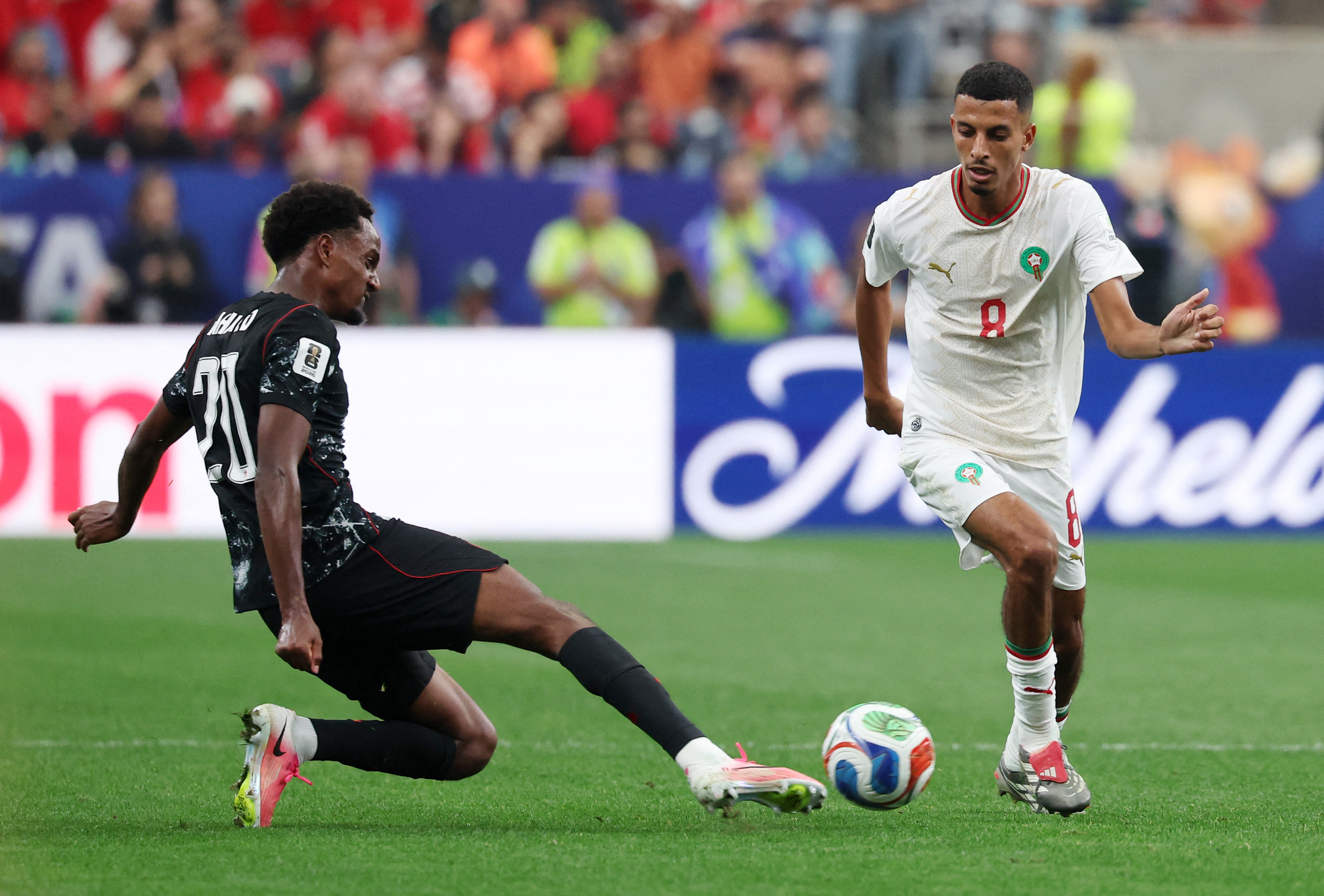
Were Canada too slow to adjust?
While Canada let the game get away from them late, it’s easy to forget that over 30 minutes of action occurred after Morocco’s opening goal before they were able to find their 2-0 goal in the 82nd minute.
Because of that, you can’t help but look at the way that Canada went after an equalizer in that period of the game, and wonder if they missed a chance to be more aggressive in their approach.
After that Moroccan opener, Canada’s next shot didn’t come until the 78th minute, when Jonathan David stepped up to take a free kick won by Stephen Eustáquio, which is quite a surprising stat.
Jonathan David strikes the free kick just over the bar. pic.twitter.com/9rJecx5Ckc
— TSN (@TSN_Sports) July 4, 2026
Yet, to that point, it stands out that Canada made minimal changes to their tactical approach, even despite watching Morocco drop back into more of a defensive posture with the lead intact - something Morocco were expected to do, too, as they’re really good at defending in a mid-to-low block when needed. 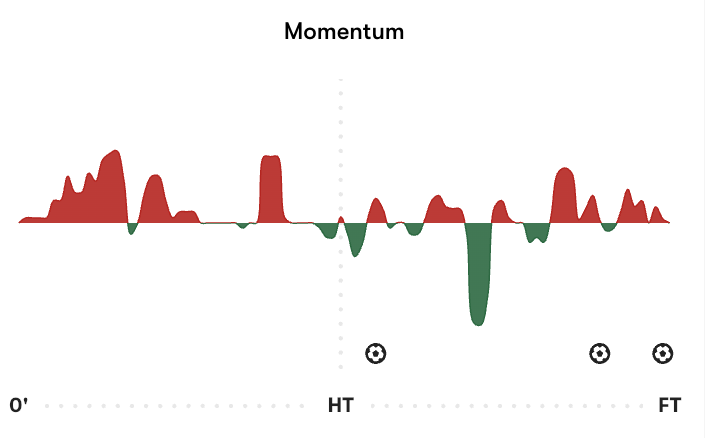
Here's the momentum map from this game, showing how Canada started, but also how they struggled to get back into the game after Morocco's first goal (FotMob)
In particular, it stands out that Canada only made one substitution before the 78th minute, and it was a like-for-like one, as they brought in Cyle Larin for Tani Oluwaseyi, as they didn’t even try to change the tempo of the game with fresh legs.
That was a huge surprise, as it felt as if Canada could’ve benefitted from a more aggressive approach, whether that was to shift their tactical setup, or to insert more fresh legs - or both.
For example, with Morocco right back Achraf Hakimi on a yellow card, could Canada not have subbed in a fresh winger such as Liam Millar, Jacob Shaffelburg or Jayden Nelson shortly after the 30 minutes, and dared them to just run at Hakimi?
Or with his quality on the ball, could it not have made sense to bring in someone like Nathan Saliba in midfield, giving Canada someone who could break down Morocco’s defensive shape with his probing passes?
Plus, what was arguably more surprising about Canada’s subs wasn’t the players they could’ve brought on, but instead who they could’ve brought off, too.
It’s no secret that the depth of this Canadian team has significantly improved over the last few years, so it’s not hard to suggest that Canada could’ve been more comfortable with turning to those players earlier in the match. Throughout this tournament, Canada’s substitutes have proved that they’re difference-makers who can come off the bench and influence games.
Instead, the bigger surprise was that they were reluctant to take off some of their players who were struggling to get involved in this game, such as Jonathan David and Tajon Buchanan, who were far from their best on the day.
It would’ve been a bold call to make to take out both David and Buchanan, no doubt, but it can’t be forgotten that Jesse Marsch made that bold call in Canada’s World Cup opener against Bosnia & Herzegovina after quiet performances from each, and he was rewarded for it with a late equalizer in a 1-1 draw where his substitutes linked up to score.
This time, though, he made the decision to stick with David and Buchanan, and they weren’t able to reward their manager's faith in them.
And on a week where bold manager substitutions stole the headlines, such as Belgium’s decision to take off key players Jeremy Doku and Kevin De Bruyne in their shocking 3-2 comeback win against Senegal in their Round of 32 clash, and Portugal’s decision to take off Cristiano Ronaldo with the score still 1-1 in their Round of 32 clash (they went on to win 2-1), you can only wonder if Canada could’ve made a similar bold call here.
That’s been the story of this World Cup - teams that have been bold and aggressive have typically been rewarded - and while Canada was bold and aggressive to start this game, they weren’t able to maintain that approach later in this game. 
Lack of cutting edge hurts Canada again:
When they look back at this tournament, Canada will also rue the chances they missed, as that ended up being a big storyline for them in the end.
It wasn’t a new problem for them - heading into this tournament, there were already worries about their lack of cutting edge in front of goal - but it will still hurt that they struggled the way that they did, nonetheless.
Especially on a day where they were eliminated without being able to score a goal, which was a surprise to see considering some of the chances they were able to create early in this game.
In particular, two big opportunities will stand out to them.
First, there was an early opportunity that Jonathan David had inside the box, as he was slow to pull the trigger on a dangerous shot and killed his shooting angle, making it easier for Yassine Bounou to make a save.
Jonathan David with the first major chance of the match! #FIFAWorldCup pic.twitter.com/yXL6Qp0Nyr
— TSN (@TSN_Sports) July 4, 2026
Then, there was a chance that Tani Oluwaseyi had, as he did incredibly well to receive the ball on the half-turn to create a half-breakaway for himself, but he was then unable to beat Bounou with his strike.
WHAT A STOP FROM BOUNOU! #FIFAWorldCup pic.twitter.com/hqP8Qqe0GO
— TSN (@TSN_Sports) July 4, 2026
To have any chance of beating this Morocco side, they needed to put away one, if not both, of those opportunities, but instead, they were left to rue those missed chances. 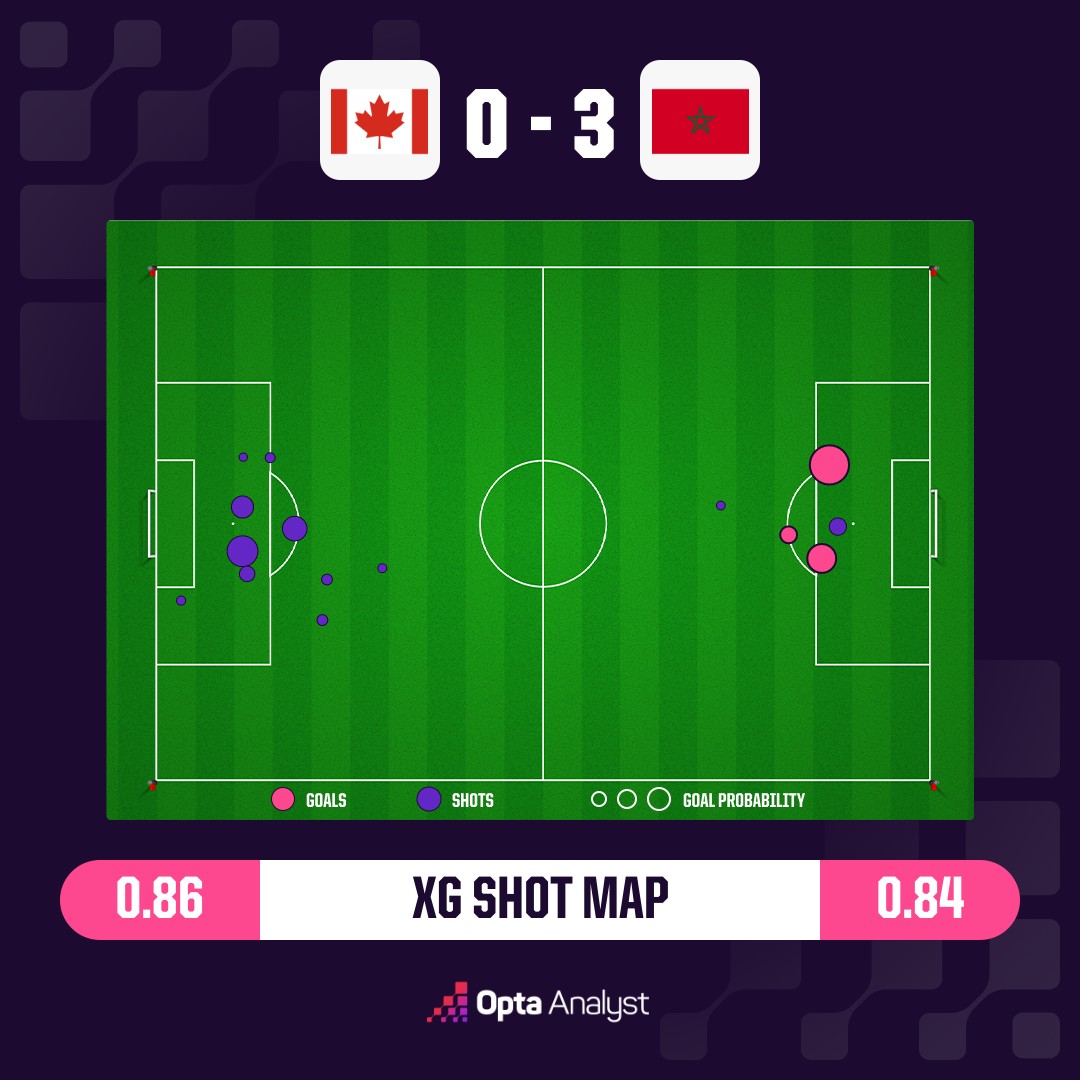
Here's the xG map from this game, showing that Canada generated some decent chances, even if they didn't have a lot of shot volume (OPTA Analyst)
Yet, as mentioned earlier, that was the story of the tournament. Statistically, Canada missed 12 big chances and underperformed their xG of 9.7 after scoring nine goals, so it’s not as if this was a one-off game where they struggled in front of goal.
In fact, other than their six-goal drubbing against Qatar, it can be said that Canada largely struggled in attack across the entirety of this tournament, as they scored just three goals in their other four World Cup games, failing to score more than a goal in each of those games.
And, for context, nine of their missed big chances came in those matches, plus they also underperformed their xG by more than two goals (they had 5.1 xG across those games), which further paints a picture of those struggles (and how much that Qatar game masked some of those offensive issues).
Because of that, the big mission for this Canadian team going forward will be to figure out how to spark their attack to life, as this wasn’t a new issue - in their past 23 games, they were held to one goal or less in 14 of them.
Across those 23 games, they’ve also had four games where they scored three or more goals, including two games where they scored six goals, so it shows that on their day, they can be dangerous - which is why it feels fair to question why Canada can’t pull that off with more regularity.
Of course, one can point to the four teams that they had those big goal-scoring outbursts against and say that three of the four weren’t even at this World Cup (Ukraine, Honduras and Romania), and that the fourth was one of the worst teams of the World Cup (Qatar).
At the same time, given that Canada generated a good number of xG and chances in the other games they played at this World Cup, it further shows that there are goals in this team - they just haven’t figured out the best way to unlock them. Unfortunately, though, they weren’t able to find that goalscoring solution in time to go even further in this tournament. 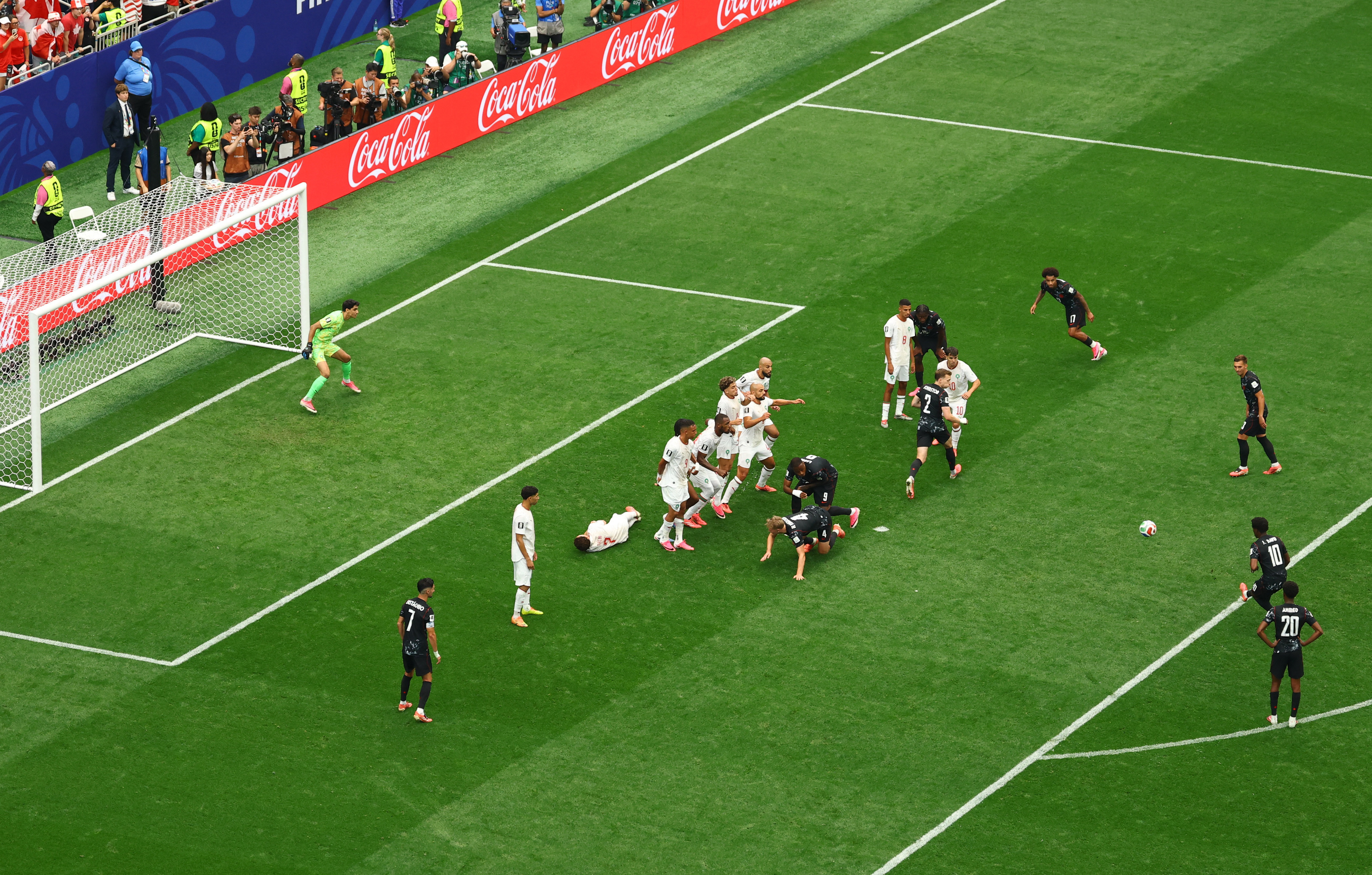
What’s next for Canada?
While it’s always heartbreaking to get eliminated from the World Cup, as you’ve got to wait four years to get your revenge (provided that you even qualify), that doesn’t mean that this Canadian team doesn’t have important games to focus on in the near future.
Just next year, they’ll be able to play in the Concacaf Nations League and Gold Cup, where they absolutely need to win a trophy, especially with how those competitions went for them in 2025.
From there, they’ll likely begin World Cup qualifiers over the next few years, something they didn’t get to participate in given their position as co-hosts for this tournament, which will be exciting - it can absolutely be said that Canada missed being able to play in competitive matches like those in this cycle.
With how young this team is, as 14 players on this squad will be 30 or younger at the next World Cup, this team is set up to build on the momentum they gained from this tournament going forward, which is great news.
Richie Laryea reflects on the #CanMNT's 2026 World Cup journey 🎙️
— OneSoccer (@onesoccer) July 4, 2026
"It's such a big moment we want to capitalize on for our country, for ourselves & for our program." pic.twitter.com/3kpirfDSVl
Now, though, they’ll face a big challenge, as they will need to find a way to keep progressing while beginning to transition their team into a new era. Often, that’s the hardest thing for teams to do.
That’s not to say that they immediately need to look at all of their players over 29 or 30 and throw them to the wayside, but they also need to ensure that they start prioritizing younger players in the next few years, especially those already embedded within this team.
A good rule of thumb is that veterans should have to battle to keep their spots in the team - if there’s a close battle between a younger player and an experienced veteran, it feels wise to prioritize the younger player with an eye on the future.
Otherwise, the big goal for this Canadian team will be to continue to evolve and adjust their identity. They’ve done a great job of defining that identity over the last few years, which has helped them massively, but that doesn’t mean they can be satisfied with where they are, either.
The secret to the success of top teams is that they’re always adjusting and tweaking to stay on top, so Canada mustn’t get complacent just because they had a good World Cup.
As seen above, there are areas where they can be sharper, such as in attack and with the mistakes they made defensively, so they can focus on finding a way to sharpen up those details going forward.
What this all shows, though, is that while Canada’s World Cup journey is over, big things can still be ahead for this Canadian team, especially if they can take the lessons learned from this special World Cup journey in stride.