What did we learn from Gustavo Leal’s Atlético Ottawa managerial debut?


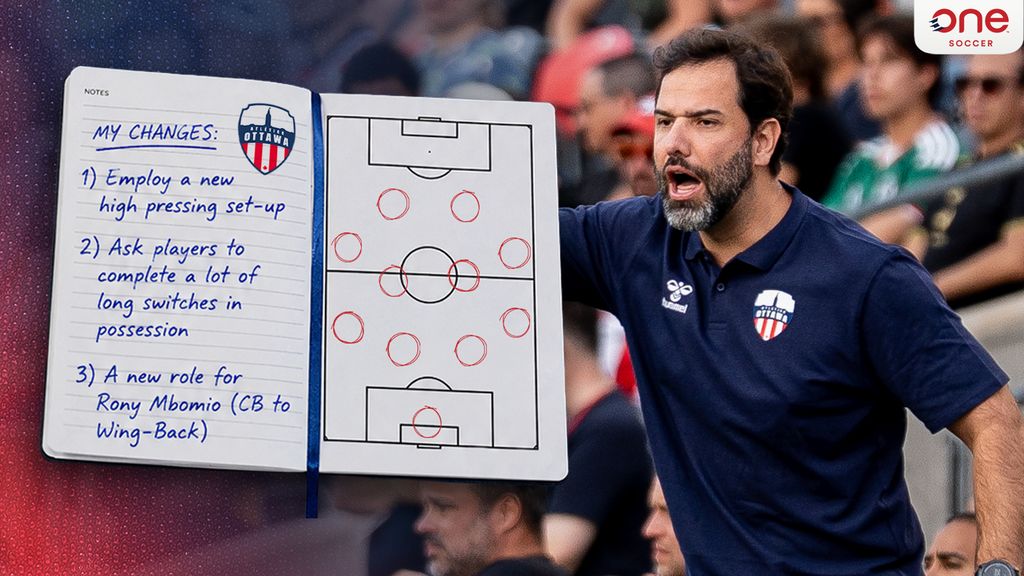
Atlético Ottawa officially kicked off a new era last week, as head coach Gustavo Leal made his Canadian Premier League sideline debut in a 1-1 draw with Inter Toronto.
Despite only being announced as Ottawa’s new coach earlier that same day, Leal immediately stepped in and assumed his new role with the club, helping them grind out a solid 1-1 draw at home.
Born in Brazil, Leal brings an impressive resume to Ottawa, as he’s been a full-time coach for over a decade despite being just 40, with stints as an assistant coach on Brazil’s Olympic-winning team in 2021 and a spell in charge of Liga MX side Atlético San Luis (Ottawa’s sister side) from 2023 to 2024 standing out on his resume.
And, immediately, he managed to give a glimpse of how this team will play under his tutelage. As expected, he didn’t change a whole lot from his predecessor, Diego Mejía, who led Ottawa to the 2025 North Star Cup before departing to join Atlético San Luis this summer, but Leal still was able to make some immediate tweaks.
Based on what he showed, this Ottawa side will still be the possession-based side that they were under Mejía, but what they do on the ball has changed, as well as what they do without it.
"The ideas are so similar, but we are different people," Leal said after his debut. "We are in transition, I ask the players to be patient if they have doubt, Diego was here a year and a half so his ideas are already in the mind of the players, but in the end, they'll see a similar team to the one from before, one that will play with possession and in the offensive end of the pitch, like we did today."
With that in mind, here’s what stood out from Leal’s debut.
A new look pressing set-up:
 Immediately, it was noticeable that instead of defending in the usual 3-4-2-1 shape that Mejía had used to great success since his arrival, Leal immediately switched to more of a traditional 4-4-2 defensive shape.
A big reason for that change, however? That shape allowed Ottawa to be a lot more aggressive off the ball, as they were able to press Toronto high up the pitch, forcing them to make mistakes.
Led by striker Emiliano Garcia, who initiated the press, he would force players to one side of the pitch, supported by Ballou Tabla just underneath him as a hybrid #10/second striker. From there, the midfield block, which consisted of Joaquim Coulanges, Juan Castro, Manny Aparicio and Gabriel Antinoro, tried to suffocate Toronto’s players on the ball, as they would immediately swarm players once they entered that area of the pitch.
The press caught Toronto by surprise, too, as they turned the ball over on several occasions when trying to play through Ottawa. The numbers show that, too, as Ottawa’s PPDA (passes per defensive actions), which measures pressing intensity, was 6.81 - for context, their average PPDA in 2025 was 10.54 and in 2026 was 14.06 (via WyScout).
That ended up having a pretty big impact on what Toronto was able to do on the ball, as already, they had to spend most of the game defending, as Ottawa held a whopping 77% possession. Because of that, they were often tired when they got the ball, and didn’t get much chance to rest in possession with Ottawa immediately counterpressing them to win back the ball when that happened. 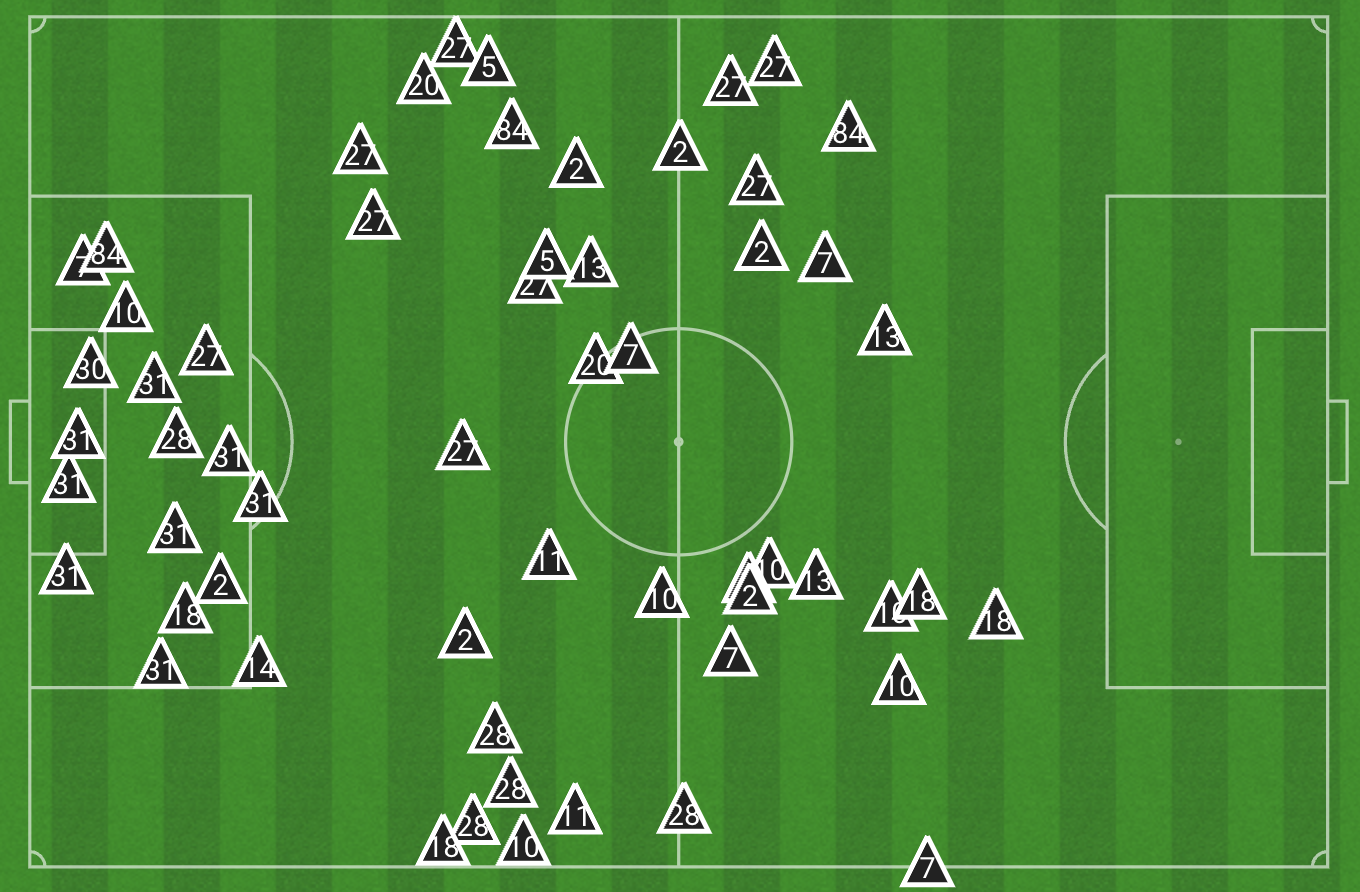
Here's all of Ottawa's defensive actions from this game, showing how they were able to press high up the pitch and win the ball in dangerous areas (OPTA)
That’s something worth watching, as a high press like that could be a dangerous weapon for Ottawa given their proficiency on the ball. Mejía’s team had elite defensive numbers due to their ability to use their possession play as a defensive weapon, but they struggled to defend when opponents broke against them in transition. Because of that, it stands out that Leal has immediately honed in on making this Ottawa team better at counterpressing, which could help them fix that.
Certainly, in this game, it made a big difference - now, they’ll look to continue working at it, especially as teams adjust to this new look scheme.
The importance of the big switch:
While Ottawa looked different defensively, they looked quite similar in possession, as Leal stuck with Mejía’s preferred 3-4-2-1 build-up shape in this game. 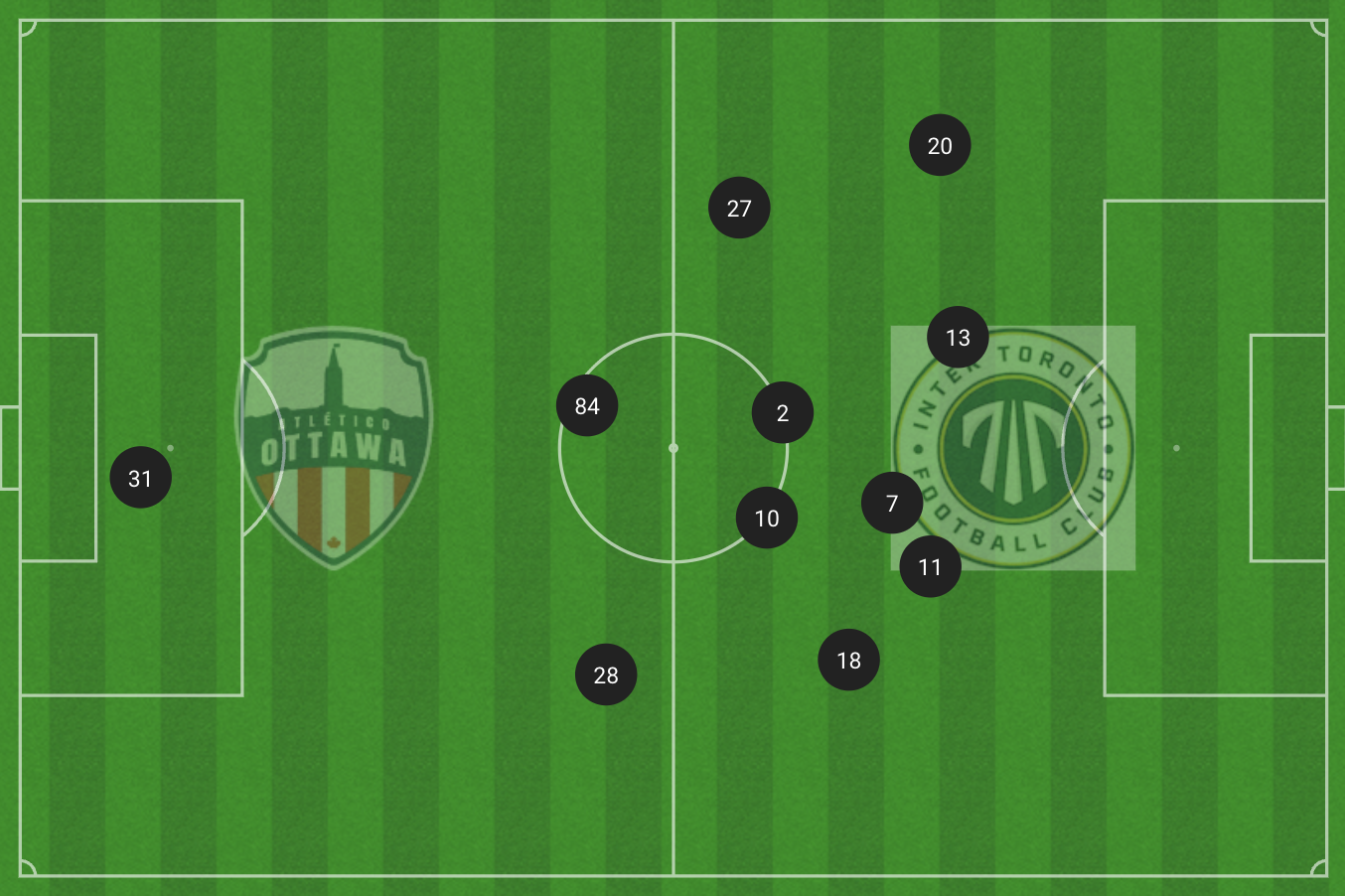
Here's Ottawa's average position map from this game, showing their shape in possession (OPTA)
And, as expected, he asked his players to be careful and controlled in possession, too, exactly as they were under Mejía. Their goal was to draw Toronto out of their shape and play through them in possession, using their movement on and off the ball, as well as their quality, to do that.
At the same time, they showed a bit of a new look on the ball, as they attempted to bypass Toronto’s pressure with a healthy dose of long balls. For context, they tried 56 long passes in this game - in 2025, they averaged just over 45 long balls, and in 2026, they averaged just under 34, showing that it’s a departure from what they’ve typically done (via WyScout).
Yet, it’s worth noting that these weren’t typical long balls, where they asked one of their forwards to win the ball or to create second-ball opportunities for their midfielders to pounce on.
Instead, they attempted a lot of switches, as their three centre backs made a habit of targeting their wing backs with long, sweeping diagonal switches of play - and they were quite successful in doing so, too.
According to OPTA, Loïc Cloutier completed 12 long balls on 15 attempts, Sergei Kozlovskiy completed nine out of 13 long balls, Daniel Aguilar completed six out of seven long balls, Wesley Timotéo completed six out of nine long balls and Rony Mbomio completed five out of five long balls - for context, Cloutier, Kozlovskiy and Timotéo started the game in the back three, before Kozlovskiy was replaced by Julian Dunn (who attempted just one long ball), Cloutier by Mbomio (who started the game higher up the pitch as a wing back) and Timotéo by Aguilar. 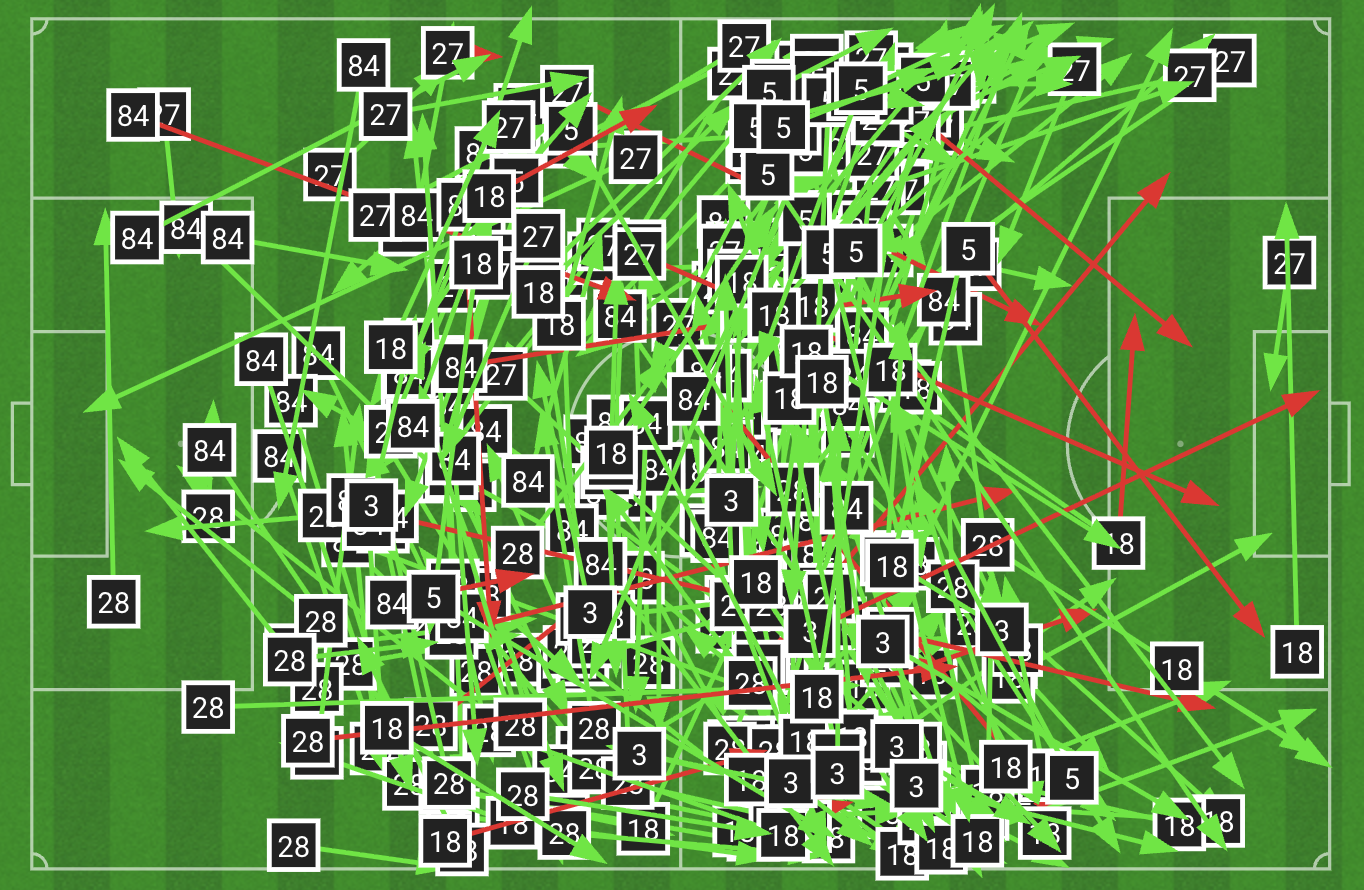
Here's the pass map of the six Ottawa players that featured as centre backs, showing that they attempted a lot of horizontal switches of play (OPTA)
Thanks to that, Ottawa were able to jumpstart several attacks with those long switches of play, which Toronto struggled to cover, which allowed them to change the point of the attack.
That’s worth noting, as a big reason why Mejía’s system was so successful was due to his attackers' ability to change the point of attack. In particular, the ability of Ballou Tabla and David Rodríguez to drop into pockets was key, as they then opened up space for their wing backs to overlap into.
Now, though, with these switches, Leal has asked his team to change the point of attack by immediately funnelling the ball out wide, and then creating the overloads from there. 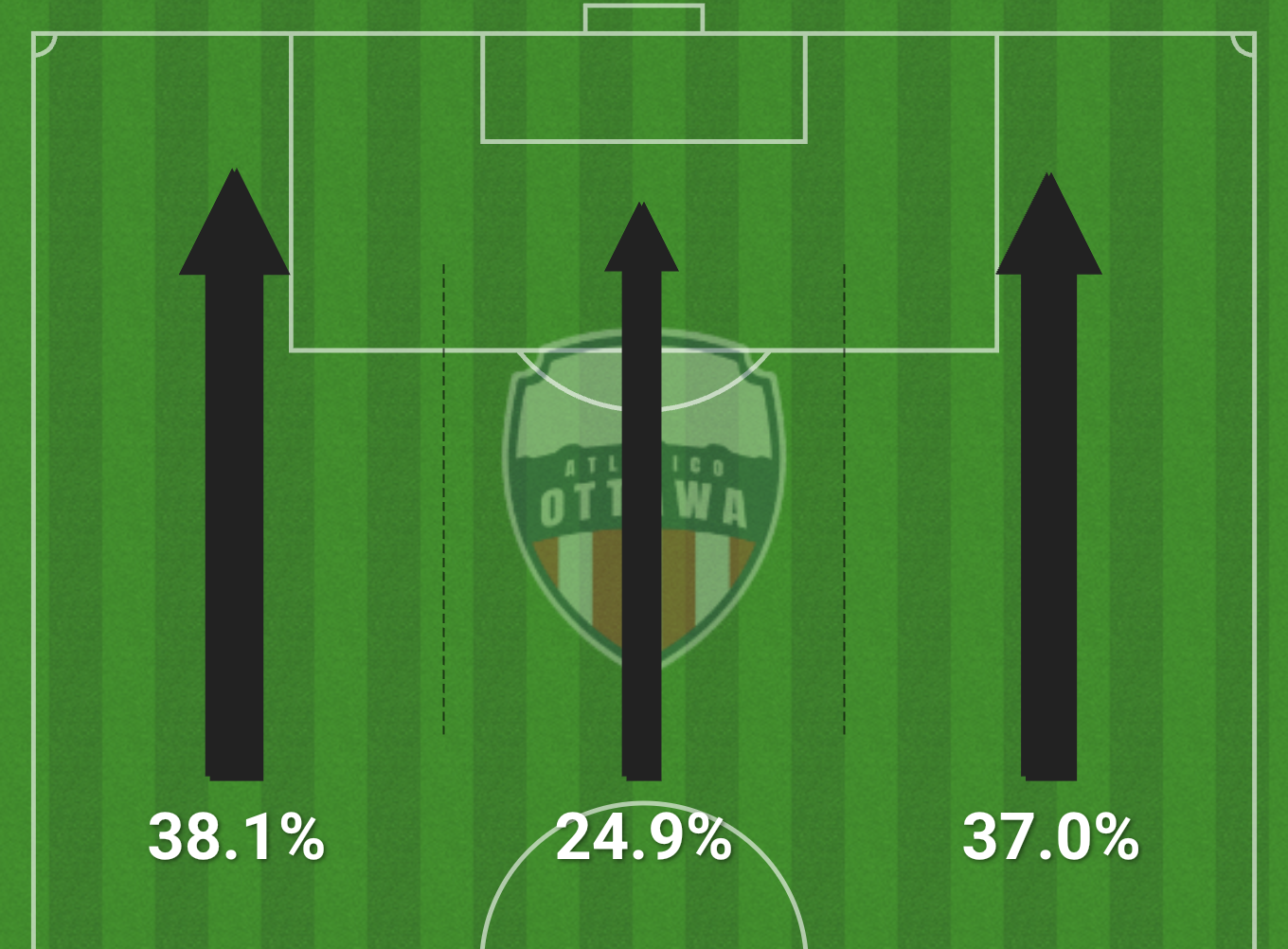
Here's Ottawa's attack map, showing how much of their attack went down the two flanks thanks to these switches (OPTA)
Instead of asking his #10s, which were Tabla and Gabriel Antinoro, to get involved in the build-up, he gave them freedom to find space in the final third, and to capitalize on the space that the switches opened up - given that Tabla scored, mission successful in that regard.
GOAL 🦖
— OneSoccer (@onesoccer) July 18, 2026
Ballou Tabla opens the scoring for Atlético Ottawa vs. Inter Toronto 🔥
🔴 Watch #CPLSoccer on OneSoccer & TSN3 pic.twitter.com/txn6a7q0Wj
Because of that, look for Ottawa to keep using that switch, both from their centre backs, as well as from midfielder Manny Aparicio, who also quietly completed 10 out of 13 long balls (OPTA).
Rony Mbomio’s new role:
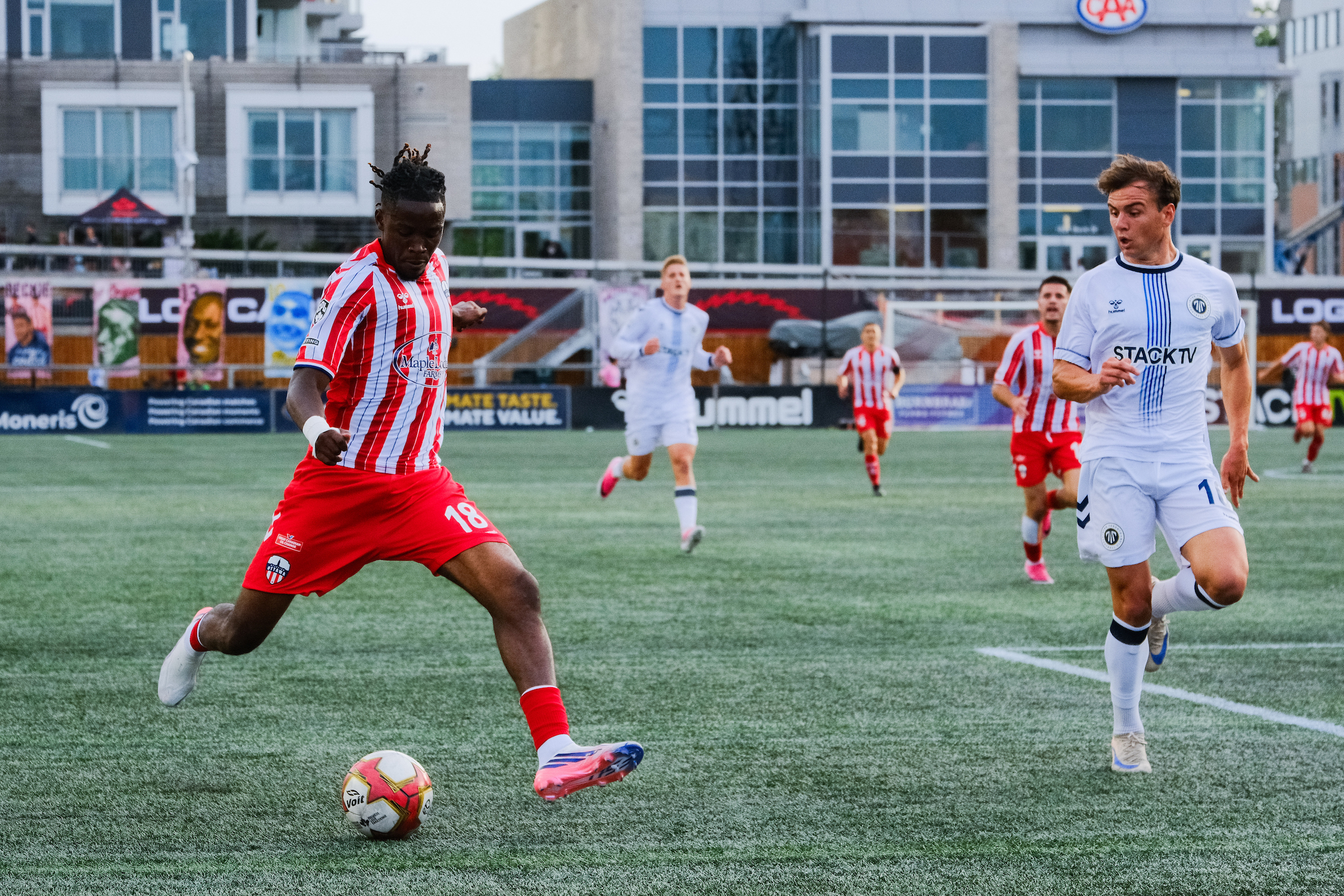 Interestingly, while Leal asked Ottawa to build up in their usual 3-4-2-1 shape, he deployed some players within some different roles in that shape.
Typically, Mejía would deploy three natural centre backs, a double-pivot of Manny Aparicio and Juan Castro, the two #10s in David Rodríguez and Ballou Tabla, and two attacking wing backs in Gabriel Antinoro and Kévin Dos Santos.
Leal, however, decided to tweak things up. At the back, he moved Sergei Kozlovskiy from an outside centre back role to the middle of the back three, allowing Wesley Timotéo, who has typically played as a wing back, to move into the back three. It’s not a new role to Timotéo, who often played in that sort of position at his old club, the Halifax Wanderers, but it was still a surprise to see.
Otherwise, Leal stuck with the Castro and Aparicio pivot, as well as the double #10s of Tabla and Antinoro, and a speedier, attacking wing back in Joaquim Coulanges.
The only other big change, however? The deployment of centre back Rony Mbomio as a wing back, which was a new tweak.
Yet, it yielded a lot of success for Ottawa, as Mbomio created a game-high four chances from his new position. 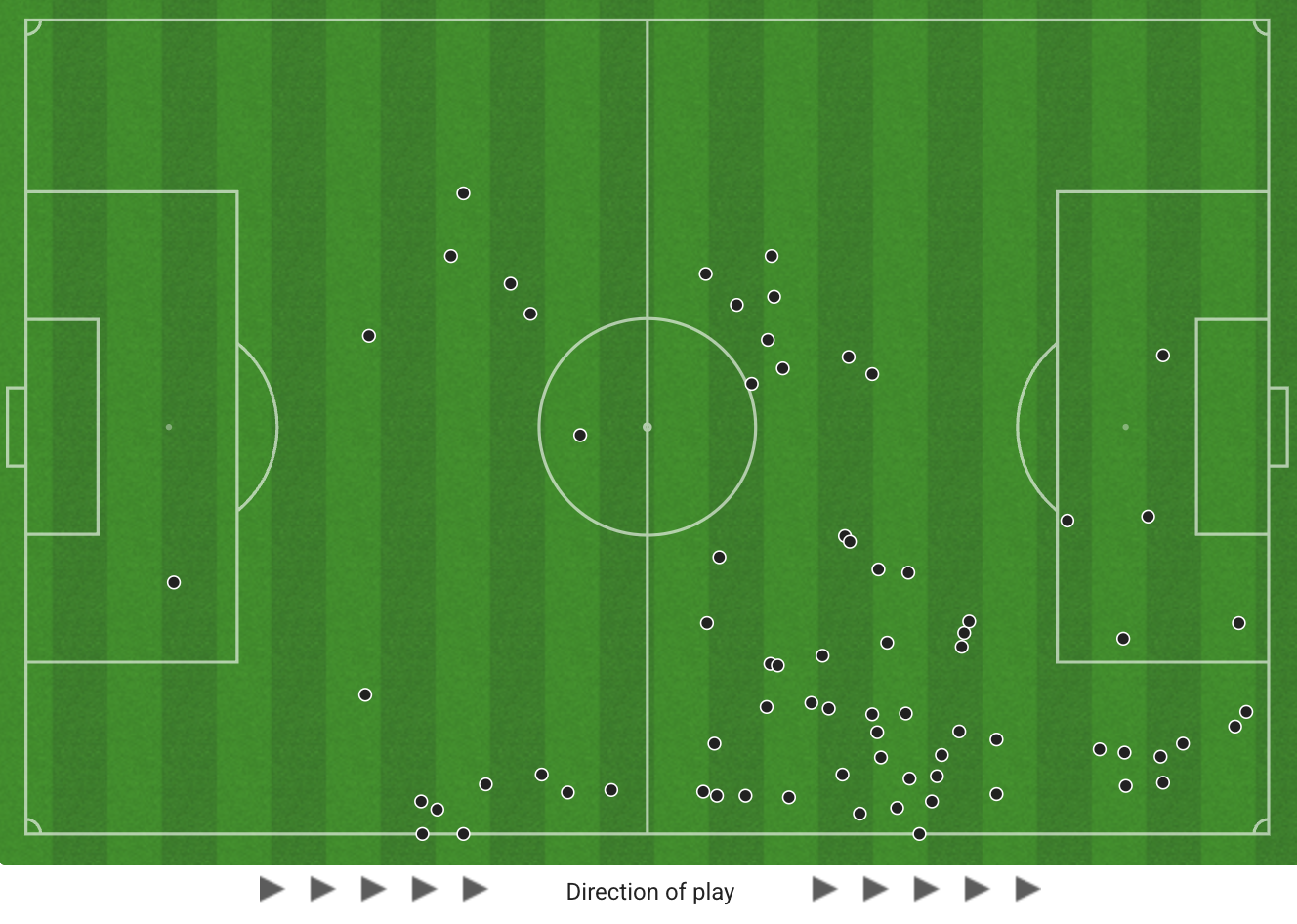
Here's Mbomio's touch map from this game, showcasing his active involvement (OPTA)
A big reason for that, however? His ability to get on the end of the aforementioned long switches, as he was a frequent target for long balls from Timotéo and Kozlovskiy, who are both left-footed, making it easier for them to switch the ball to Mbomio on the right flank.
Often, Mbomio was so open that he’d be able to control those switches without a problem, but even when they were contested, he typically didn’t have a problem in winning his aerial duels, as he has more height than a typical wide player.
That added a new layer to Ottawa’s attack, as Mbomio’s presence gave them an out ball in possession.
You add in that he was pretty impactful when he did get on the ball - not only did he create four chances, but he also completed 51 out of 56 passes, generated one shot and completed two out of five crosses - and it’s safe to say the Mbomio at wing-back experiment paid off. 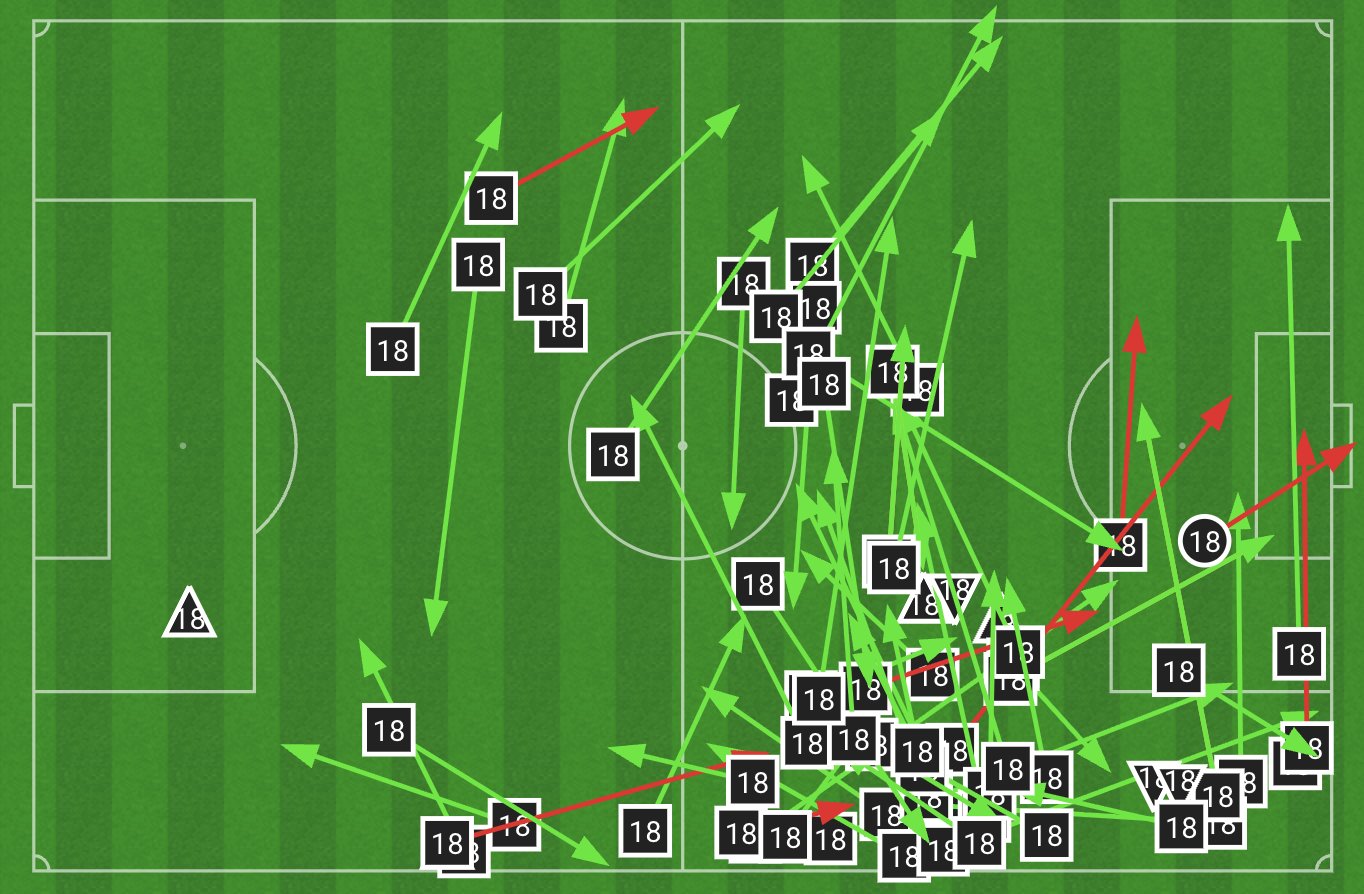
Here all of Mbomio's actions from this game (OPTA)
Because of that, it’ll be fascinating to see if Leal continues with that. At centre back, Mbomio has shown great comfort on the ball, so it’s not surprising to see this new role work out for him, but it’ll still be interesting to see if he’s able to maintain this level of play at the position over a longer period of games, especially as teams hone in on what worked for him in this game.
In this match, though, his presence caused Toronto problems, showing that it can be Leal’s new trump card - for now.