Why domestic soccer matters: 89% of World Cup semifinalists began in home leagues


How do you become a World Cup-winning country?
It starts with building a foundation at home.
As the semifinals of the 2026 FIFA World Cup get underway, this tournament's most successful teams offer clear evidence for the importance of a strong domestic league.
Obviously, it's no surprise for England's team to be made up mostly of Premier League players, nor would Spain be expected not to have a litany of La Liga stars.
It's more than that, though.
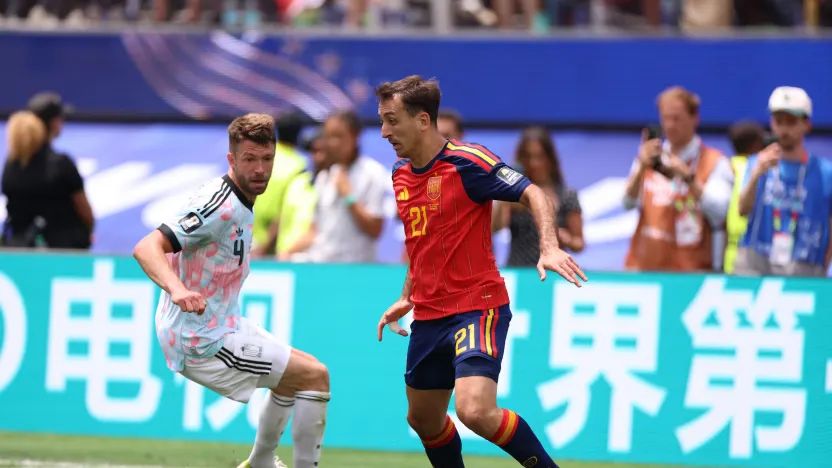
Of the 104 players in the squads of World Cup semifinalists Spain, France, England and Argentina, 92 made their professional debut in their country's domestic pro system — 88.5 per cent.
In fact, 93.3 per cent of World Cup-winning players in the last 30 years got their start in their country's domestic league.
That's still not surprising given the prestige of the top leagues in Europe, and the history of Argentina's Primera División and Brazil's Série A as stepping-stones to Europe.
Leagues don't become world-class overnight. These are countries where the game took root a century ago, where local clubs are part of the fabric of communities, and the pathway to the top is well established.
If we extend to this year's World Cup quarterfinalists, adding Belgium, Norway, Switzerland and Morocco, it's still 168 out of 208 players — 80.8 per cent — who debuted in their home league.

The only outlier in this respect is Morocco, where the majority of their players began their pro journeys in France or the Netherlands, but even in that team, six players started in the Botola Pro (and a handful played academy football for Moroccan clubs).
Although each of those quarterfinalist nations also has a well-established league with decades of illustrious history, they're rarely the final stop for world-class players. Each of Belgium, Norway, Switzerland and Morocco's teams had just two or three players currently in their domestic leagues, but so many of them used that platform to launch their careers.
In other countries, there's more immediate evidence of how improving the domestic ecosystem can fuel the national team. Although most European countries have spent a century cultivating local football, some nations developed their league structures more recently.
Japan, for instance, officially launched the J.League in 1992. Six years later, they qualified for their first-ever World Cup and have been at every subsequent tournament, advancing to the knockout stage five times. They won their first AFC Asian Cup in 1992 as well, and went on to win it again in 2000, 2004 and 2011.
As a co-host of the 2002 tournament, Japan won their group with a team composed entirely of players produced by the Japanese league system.
Australia, similarly, kicked off the A-League in 2005. Previously, they'd qualified for just one World Cup in 1974, but they've been at every tournament since 2006, and won the Asian Cup in 2015.
Part of the context for that growth is Australia's switch to the Asian confederation from Oceania in 2005, which gave them more frequent competitive matches, but the domestic league laid a strong foundation.
Even the United States got a boost from the launch of Major League Soccer, combined with the momentum of hosting the 1994 World Cup. They've won nine Concacaf trophies since the birth of MLS, and had just one before.

Now, it's Canada's turn.
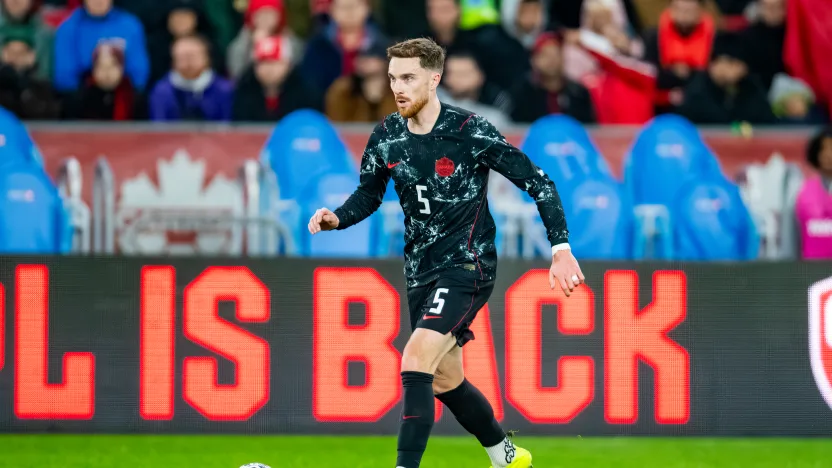
In Canada, our World Cup squad featured just one former Canadian Premier League Player, in ex-Cavalry FC defender Joel Waterman.
That said, 10 of the players started professional careers at a Canadian MLS club, and five more played senior football for an Ontario Premier League team.
After returning from the World Cup, several Canadian players called for continued growth of the domestic game here. Ali Ahmed and Richie Laryea, among others, specifically mentioned the Canadian Premier League as a key factor in Canada's future World Cup campaigns.
For Canada to have sustained success on the international stage, it needs to consistently produce players who can play at the highest levels of the game. The best way to do that, generally, is to produce more professional players, and develop them in a competitive league at home so they're ready to make the jump when they move to a new club.
The four-year cycle leading into the next World Cup begins now in Canada.
Jesse Marsch has already indicated he'll be watching keenly later this month when the U-20 national team attempts to qualify for both the Olympics and the FIFA U-20 World Cup. That squad will certainly feature Canadian Premier League talents like Shola Jimoh and Sergei Kozlovskiy, both of whom could one day play a major role in the senior team.
In most recent youth camps, many of Canada's top players at each age group have been CPLers, who have been training with and competing against seasoned pros in a league where winning matters. That's an advantage over players without pro experience.
The journey is long; building a strong soccer ecosystem in a country is incredibly difficult, and can't happen overnight in Canada. We've made incredible progress in the last 10 years, though.
As the CPL continues to grow, hopefully boosted by the momentum of co-hosting a World Cup, so too will the Canadian men's national team.
The idea of Canada playing in the round of 16 and beyond on a regular basis is not far-fetched.
If the game continues to grow here on home soil, the sky is the limit for the national team.