SCOUTING REPORT: What to expect from Chile, Peru and United States in CanMNT’s 1st tests of 2030 World Cup cycle


The CanMNT are back in action this week, as they’ll take the field for the first time since the 2026 World Cup.
After falling to Morocco in the Round of 16 of that tournament, capping off a successful World Cup run as co-hosts, Canada is now looking to keep that momentum going as they begin a new cycle.
To do that, they’ll look to take the lessons learned from the last few years, and apply them as they begin to tackle what’s next for them.
First, a trio of friendlies await them over the next few weeks, as they’ll take on Chile in Toronto, Peru in Montréal and the United States in Minnesota.
THEY'RE HOME 😎
— OneSoccer (@onesoccer) September 22, 2026
Here are some sights & sounds from DAY 1 of training camp as the CanMNT 🇨🇦 reconvene for the 1st time, post-World Cup 💪 pic.twitter.com/V83mYOclEm
With some crucial Nations League matches looming this fall and spring, a Gold Cup on the horizon next summer, and the start of World Cup qualifiers kicking off next fall, this camp will be all about setting the tone for those bigger games that are still to come for this Canadian team.
Because of that, their focus will be on further instilling the habits they’ve spent the last few years drilling into their side. Since his arrival, head coach Jesse Marsch has made it clear that he wants this team to be hard to play against, employing a high-pressing defensive structure and direct attacking set-up.
At the same time, he and his staff will know that while their approach has had a good amount of success so far, with this Canadian team doing a good job of employing their coaches methods, they’re still far from their final form as a team.
Such is the beauty of this sport is that teams are always evolving, and chasing that best version of themselves (or the closest possible version of that).
With that in mind, that’ll give an idea of what this Canadian team will want to achieve this window. While they’ll want to make the most of the opportunity to play (and beat) three solid opponents, they’ll be focused on themselves as they begin this new stage of growth.
Having called up a team filled with some newer faces, surrounded by some familiar veterans, that shows that their focus is on the next chapter of their evolution, which they’ll hope culminates with some success over the next four years, such as lifting a trophy, leading into what they hope is an even more successful 2030 World Cup, one where they’re able to improve on the landmark achievements they accomplished this past summer.
ROSTER DROP 🚨
— OneSoccer (@onesoccer) September 15, 2026
Here's the 26-player CanMNT 🇨🇦 squad for upcoming friendlies vs. Chile 🇨🇱, Peru 🇵🇪 & the USMNT 🇺🇸
IN ✅
- James Pantemis
- Richard Chukwu
- Jovan Ivanisevic
- Jeevan Badwal
- Junior Hoilett
- Samuel Piette pic.twitter.com/xhTj7kVrdA
On that note, though, here’s what you need to know about Canada’s three opponents this window, as well as what to expect from Marsch’s side in those games.
Chile:
It’s a new era for the Chilean National Team, as they continue to adjust to life following the end of a golden generation for the team.
After their historic back-to-back Copa América triumphs in 2015 and 2016, and a run of two straight qualifications to the World Cup in 2010 and 2014, things have slowly been declining for this Chilean team, who have missed out on the last three World Cups, and are coming off a group stage exit at the 2024 Copa América.
In particular, their performances at the 2024 Copa América and during 2026 World Cup qualification signalled how much things have changed for them in recent years.
During that Copa América, they were unable to get out of a group with Argentina, tournament debutants Canada and a struggling Peru side - in the past, they would’ve been a shoo-in to make a run to the knockout stages, given that they hadn’t suffered a group stage exit at the tournament since 2004.
Then, during World Cup qualifying, Chile were unable to take advantage of an expanded tournament, as they placed dead-last in CONMEBOL qualifying with just 11 points from 18 games - putting them 17 points behind an automatic spot, and nine points behind an intercontinental playoff spot. For context, they would’ve qualified automatically in 2018 and would’ve finished in a playoff spot in 2022 had those tournaments carried an expanded format, showing why it was so shocking to see them struggle the way they did in qualifying for this 2026 tournament.
Yet, that shows why their big focus is on hitting the reset button this cycle. With legends that had carried them through the 2010s such as Alexis Sánchez, Arturo Vidal and Eduardo Vargas all in their late 30s and seemingly out of the picture going forward (even if they haven’t formally announced their international retirement), Chile’s big focus will be on finding the next generation of players to build around.
Certainly, their squad for this window reflects as much, as they’ve called in an astonishing 21 players 27 or younger for their friendlies against Canada and the United States, including 12 players 23 or younger - and, for good measure, they’ve also brought in three teenagers as training players, too.
In fact, just one of their players in this squad even has more than 50 caps, and just five have more than 25 caps, which helps give an idea of how inexperienced this side is.
Led by interim manager Nicolás Córdova, who took over from Ricardo Gareca last year, their goal is simple - try and right the ship ahead of World Cup qualifiers, whatever they might look like in South America (given that three CONMEBOL nations will be co-hosting the 2030 tournament and will presumably earn automatic qualification because of that).
So far, the results have been mixed for Chile under Córdova. After closing out World Cup qualifying without a win in their last six games (although they drew against World Cup-bound Uruguay and Ecuador), Chile has since played a bunch of friendlies, which included a pair of wins against Peru and a win against Russia at the end of 2025, before they beat Cabo Verde and lost to New Zealand in a pair of friendlies in March of this year.
Then, before the World Cup, they narrowly fell 2-1 to Portugal before beating DR Congo, capping off a run of four straight games against World Cup bound sides.
Across those friendlies, they alternated between a 4-2-3-1 and a 4-4-2, although they did experiment with a back three in their defeat to New Zealand, as they tried to be relatively defensively organized - among the six friendlies with statistical data (just their friendly against Congo is missing on WyScout), they conceded 1.34 xG on an average of 10.5 shots, and averaged a PPDA (passes per defensive action) of 10.88 which isn’t bad and shows improvements they’ve made to be more aggressive defensively.
Where they struggled a bit, however, was offensively, as they averaged just 1.04 xG on 8.83 shots, and held just 46% of possession.
Yet, that shows what their focus will be this camp. They’ll want to continue to be more tough to play against defensively, playing aggressively but organized, while unlocking another level offensively.
To that point, only one player in their squad, Ben Brereton Diaz, even has double digits goals for Chile (he has 10, no one else has more than five), showing that they’ll be looking for offensive solutions to emerge, especially among the younger group of players that they called up. 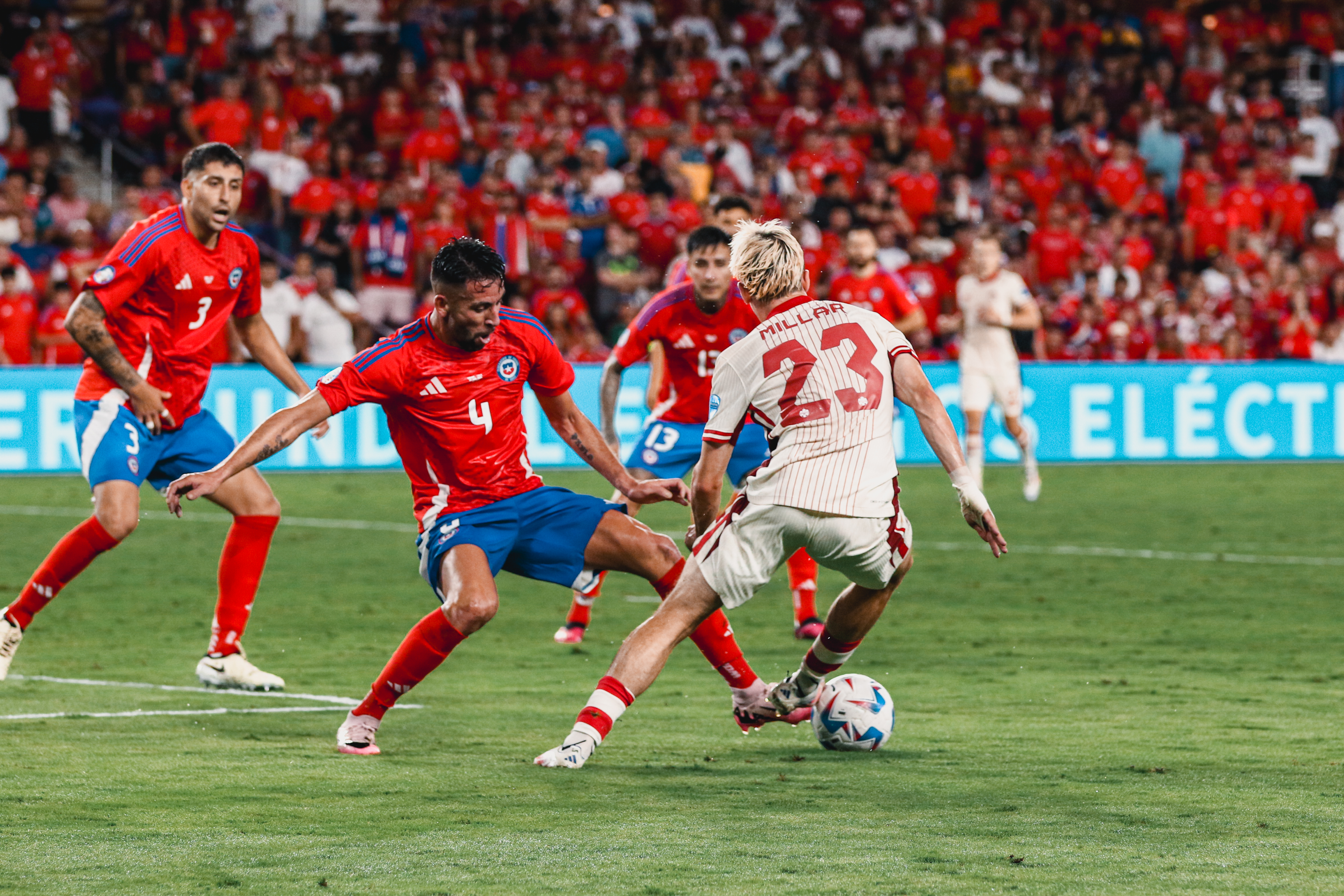
Peru:
Similarly to Chile, Peru is going through a bit of a generational shift of their own, as they look to return to the heights they hit in the 2010s and beginning of 2020s.
After qualifying for the 2018 World Cup, snapping a 36-year drought to do so, Peru narrowly missed out on the 2022 World Cup in a playoff shootout defeat during the intercontinental playoff, before flailing out pretty spectacularly in qualifying for the 2026 tournament (they finished just one point ahead of Chile in second-last place in CONMEBOL qualifying).
Meanwhile, at the 2024 Copa América, they, much like Chile, failed to get out of that group with Argentina and Canada, marking the first time since 1995 that they’d exited during the group stage - which stood out after they finished third in 2011 and 2015, second in 2019 and fourth in 2021.
Safe to say, the glory days they achieved under manager Ricardo Gareca between 2015 and 2022 are long gone - since Gareca’s departure in 2022, Peru have had six managers (although three of them have been on an interim basis).
Right now, Brazilian coach Mano Menezes is the one in charge of this side, and he brings a lengthy CV to the table which includes stints as the Brazil boss, and all sorts of club experience in Brazil.
Unlike Chile, however, Peru haven’t quite embraced a full generational shift quite yet. In their squad for this window, in which they’ll play the United States, Mexico, Colombia and Canada, Peru have called in five players who are 34 or older, including program veterans Gianluca Lapadula, Pedro Gallese, Yoshimar Yotún and André Carillo. To be fair, they’ve also called in 15 players 27 or younger, including 10 who are 25 or younger, but they still look set to lean on their older players to help shepherd that new crew as a generational shift begins.
To be fair, that’s not a bad thing - the challenge for Peru will be to find the right balance between those experienced players and the new ones, which is why windows like this one will be so key for them, offering them a chance to look at those younger players in lower stake environments before World Cup qualifying begins.
Since his hiring at the beginning of 2026, Menezes has taken charge of four games for Peru, as they fell to Senegal and drew Honduras in March, before beating Haiti and losing to eventual World Cup champions Spain in June.
In those games, Peru averaged just 0.9 xG on seven shots, while conceding 1.54 xG on 10 shots, while averaging 47% possession, as they’ve kept their games rather low-event. Given that their PPDA is over 22, it shows that they’re not going to be a high-pressing team, as they’ll prefer to sit back and hit on the counter-attack.
Because of that, their goal going forward will be to tighten up defensively, while finding a bit more threat in the attack - their top five scorers in their current squad are all 30 or older, showing that they’re looking to embark on a bit of a generational shift offensively, more specifically. 
United States:
Despite reaching the Round of 16 at the World Cup for a second consecutive tournament, which is not a bad achievement for a side who famously missed out on the 2018 World Cup altogether, there’s a feeling that the US underperformed this summer, especially considering their position as co-hosts (and the advantages that gave them).
Unlike Canada and Mexico, the US had a path that guaranteed they’d stay at home all tournament, no matter how they performed, which had some feeling as if they could’ve been in a position to make a run to the quarter-finals or even the semi-finals - at the very least, matching their best-ever finish of the quarter-finals, which they achieved at the 2002 World Cup, seemed like the bare minimum for them.
Yet, that shows why the tournament felt like such a disappointment for this US team in the end. After starting the tournament extremely well, beating Paraguay and Australia to qualify for the knockout stages after just two games, they seemed set up to do well in those bigger knockout matches, even despite a 3-2 loss to an already-eliminated Turkey in their final group stage match.
To be fair, a 2-0 win over Bosnia & Herzegovina in the Round of 32 had them on the right track, even despite a red card to Folarin Balgoun. But in the end, however, that Balogun red card ended up being the beginning of the end for them, as that red card got rescinded in extremely controversial fashion (with the US president claiming responsibility for that happening), putting a target on the US’s back heading into their Round of 16 match against Belgium.
As a result, Belgium dispatched the US in a comfortable 4-1 win, putting in a performance that they admit was fuelled by the actions of the Americans in the days leading up to the game.
Would the US have been able to beat Belgium without the Balogun scandal hanging over their heads? It wouldn’t have been easy to do that, as they had fallen 5-2 to Belgium in a friendly earlier this year, but they would’ve felt they’d have had a much better chance than they ended up having in that Round of 16 match, which never felt like a contest.
Because of that, the US are looking to quickly hit the reset button for this new cycle. Even before their disappointing World Cup, they’ll have looked back on the past few years with a bit of disappointment. They won the 2023 and 2024 Nations League, which was a good achievement, but they finished fourth in the 2025 Nations League, were eliminated in the semi-finals of the 2023 Gold Cup and lost in the final of the 2025 Gold Cup, which were all disappointing results.
And, of course, you can’t forget their performance at the 2024 Copa América, as they failed to get out of a group with Uruguay, Panama and Bolivia despite hosting the tournament.
When considering that, it adds some context to their World Cup performance, as their 2024 Copa América, 2025 Nations League and 2025 Gold Cup showings had put pressure on them to do well at the World Cup.
Now, that’s put further pressure on head coach Mauricio Pochettino heading into this new cycle. When he was hired, it was seen as a big coup for the US when it came to their ambitions of a deep World Cup run, but so far, he hasn’t even surpassed what his predecessor, Gregg Berhalter, has achieved, given that both had the same results at the World Cup and that Pochettino is yet to win a trophy with the US (Berhalter won two Nations League trophies and one Gold Cup).
With that in mind, Pochettino has his eyes on the future to start this new cycle, as he’s called in an extremely young group for these friendlies, in which the US will also play Peru, Chile and Mexico, along with Canada. Among the 28 players called in, none are over 30, 22 are 25 or younger, 15 are 22 or younger, and eight are teenagers, including 16-year-old MLS breakout phenomenon Cavan Sullivan.
In fact, 13 of his players are uncapped altogether, with just nine players having more than 20 caps, showing how inexperienced this squad is. He has called in some veterans, such as Tyler Adams, Antonee Robinson, Miles Robinson, Chris Richards and Sergiño Dest (and Gio Reyna is a veteran at this stage despite being just 23), so it’s not as if it’s fully skewing younger, but it’s clear that Pochettino’s focus is on unearthing some new players for this next cycle.
To be fair, that’s something that Pochettino has spent a lot of time doing since joining the US, as he’s made a point of expanding the player pool at every available opportunity, with the goal of improving competition in their ranks. So this is nothing new from him.
What will be more interesting to follow is how Pochettino looks to evolve this team tactically going forward. They’ve done a good job of being dangerous offensively in 2026, generating 1.68 xG on 12.33 shots per game (and scoring 1.89 goals), but they’ve struggled defensively, allowing 1.49 xG on 10.67 shots (conceding 2.11 goals). In particular, they’ve got some big questions in goal, as Matt Freese had a tough end to his World Cup, which is perhaps why Pochettino has called in three other goalkeepers, who have a combined one cap for the US, to challenge Freese this camp.
So while Canadians will be looking at this game as the big match to watch this window, given the US’s status as a team and the growing rivalry between these two sides, the reality is that the US’s eyes will be on the future in these games. 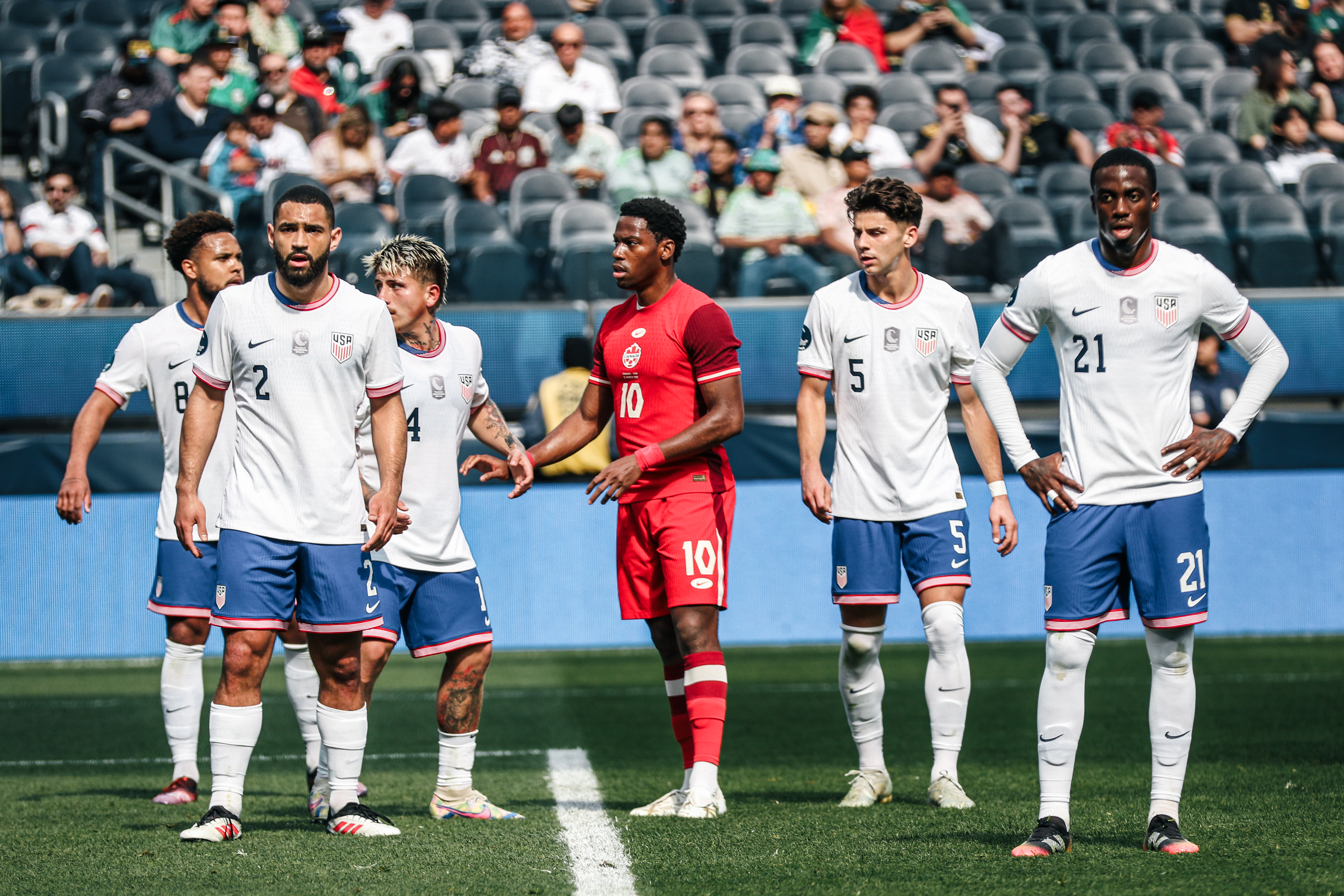
Canada:
As mentioned earlier, Canada’s goal this camp will be to hone in on their performances as much as the results, given that they’ve been very result-oriented in recent years - although you’ll expect them to go all out for the US game as they try to further build that rivalry.
With nine players 23 or younger in their squad, and nine players between the ages of 24 and 27, this Canadian team is filled with players who will hopefully play a big role for this team in this cycle - with many of those players having already been key fixtures on this team for the last two cycles already.
No place like home 🇨🇦#CanMNT | 📸 Michael Chisholm pic.twitter.com/km666BZPQS
— OneSoccer (@onesoccer) September 23, 2026
It’s not the strongest possible Canadian team, as Alphonso Davies isn’t in the squad despite a hot start to the season as he takes a break for his honeymoon, while the likes of Ismaël Koné, Moïse Bombito, Alistair Johnston and Ali Ahmed are all recovering from long-term injuries, but it’s still a strong team.
Otherwise, tactically, look for Jesse Marsch’s big focus to be on what this Canadian team does in both boxes. The numbers support the idea that this Canadian team has been bought into Marsch’s tactics, as in 2026, they’ve averaged 1.84 xG on 14.56 shots per game offensively, while conceding just 0.66 xG on 4.89 shots defensively, which are excellent numbers. Along with the fact that their PPDA is 9.4, they’ve got all of the hallmarks of ‘Marsch-ball’ downpat.
Yet, despite that, they’re scoring just 1.56 goals per game, and conceding 1, as they’re underperforming both of their metrics (that’s quite jarring from an offensive perspective given that Canada had a 6-0 win vs. Qatar at the World Cup).
That was the story of their World Cup, in the end - they were eliminated by Morocco despite a good performance as they struggled to put away their chances and gave up a few goals they wanted back defensively.
Because of that, the big emphasis for them to start this new cycle will be to hone in on those details in both boxes that have hurt them at times, especially in bigger games, while further evolving their overall tactical game as teams adjust to what ‘Marsch-ball’ can do to them.
All #s via WyScout.